
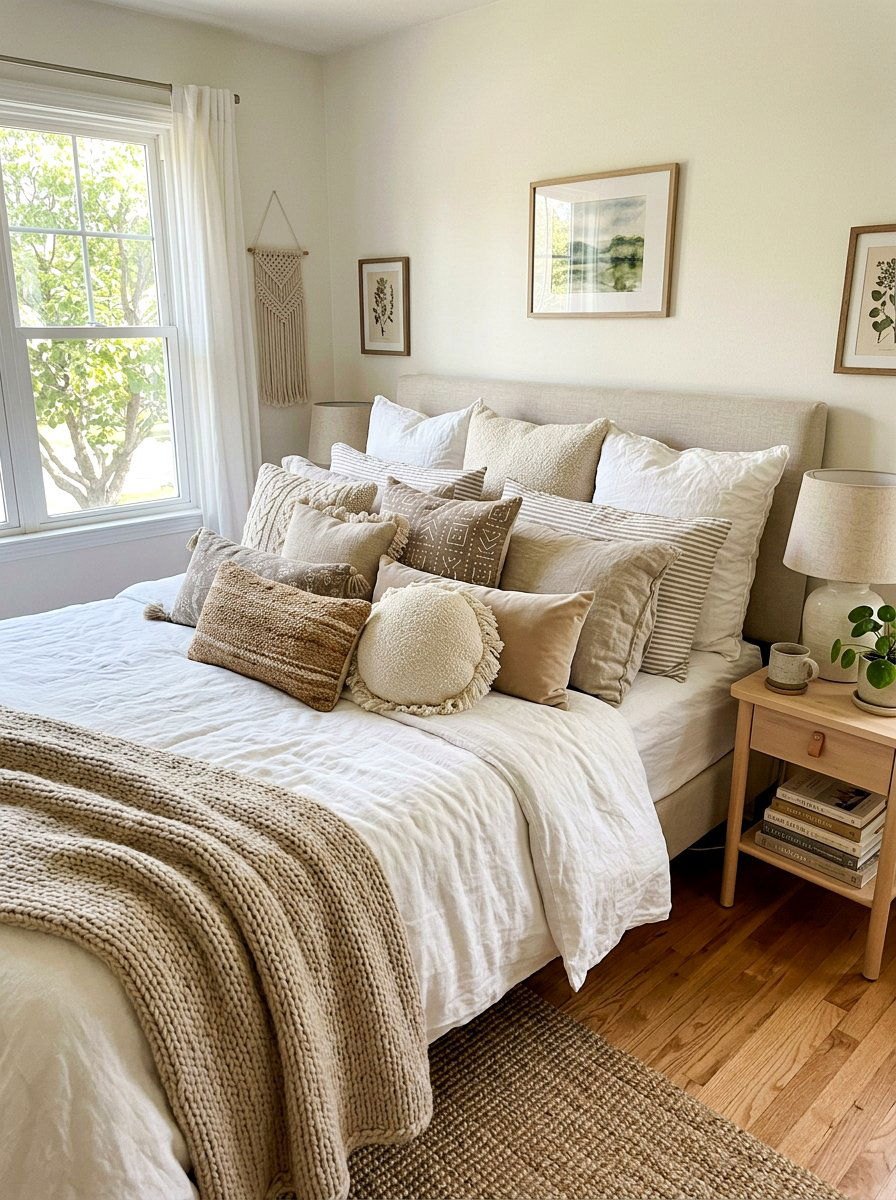
Most bedroom decorating goes like this: you buy a cute lamp, then a rug that fights the lamp, then bedding that fights them both, and six months and $400 later the room looks like a group project where nobody talked. I’ve done exactly this. The fix isn’t taste and it isn’t money — it’s ORDER. Learning how to decorate your bedroom in the right sequence means every purchase makes the previous one look better instead of arguing with it.
Here are the 9 steps in the order designers actually use them, with the measurements, prices and shortcuts that guides usually skip. There’s a budget order at the end for when the money runs out mid-project (it will), plus a $150 starter version that gets you 80% of the result.
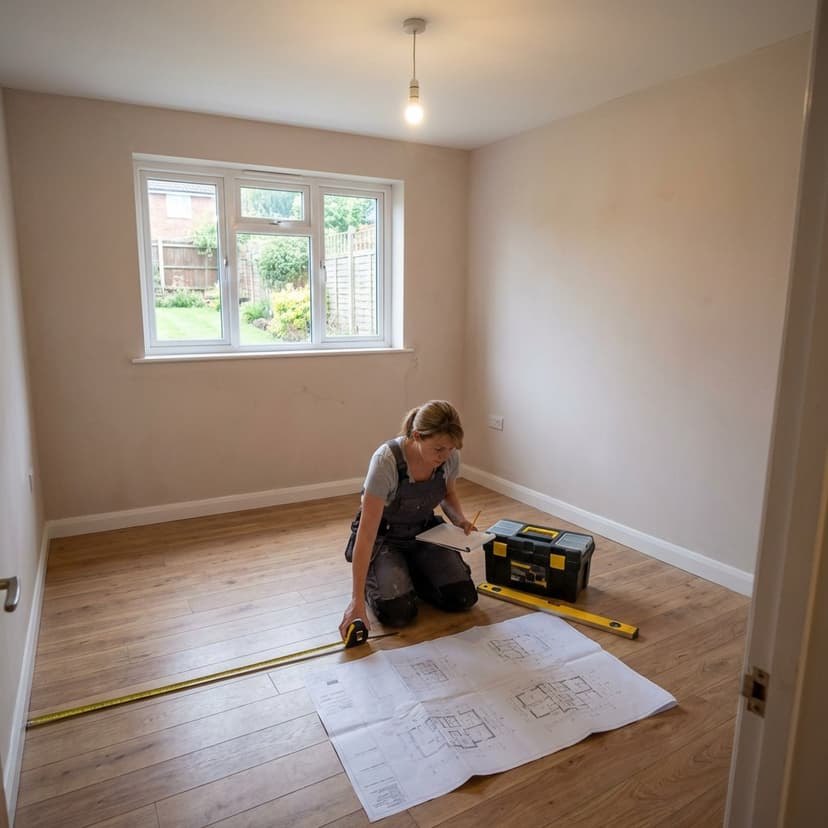
Step 1: Empty It, Measure It, Photograph It
Take everything that isn’t bolted down OUT — art, clutter, the chair that’s really a laundry shelf. Then measure: room length and width, the bed, the wall behind the bed, window positions, and note where the outlets and door swing are. Take a photo from the doorway; that’s the view your brain will judge the finished room by.
Write the numbers in your phone. Every later decision — rug size, curtain width, whether that dresser fits — comes back to this list. Skipping Step 1 is how to decorate your bedroom the expensive way: twice.
Step 2: Pick the Palette Before Anything Else
Choose three colors and write them down: a base (walls/bedding — usually a warm neutral), a support (wood tones, curtains, rug) and an accent (cushions, art, one brave object). Every future purchase gets one test: does it belong to the palette? If not, it doesn’t come home, no matter how cute it is.
If paint is in the plan, this is when you choose it — our cozy paint colors guide has the 5-step system and the shades that rarely miss. Palette first is the rule that makes the rest of how to decorate your bedroom feel almost automatic.
Step 3: Fix the Layout (It’s Free)
Bed on the longest solid wall, ideally where you see it from the door — the bed is the room’s headline. Leave at least 24 inches on each side (30 is comfortable), and keep a 30–36 inch path from door to bed to window. Dresser opposite the bed or on the longest free wall; nothing tall in front of a window.
Live with the new layout for two nights before buying anything. Half the “my bedroom feels wrong” problems are layout problems wearing a shopping list. (IKEA’s bedroom planning guides are a decent free sanity check for tight rooms.)
Step 4: Walls — Paint or One Great Shortcut
Painting now, before textiles arrive, is the cheapest transformation in the whole project: about $100 and a Saturday for most rooms. No permission to paint? The shortcut is a large-scale focal point instead — an oversized print, a woven hanging, or a peel-and-stick panel behind the bed. Bare walls are the main reason undecorated bedrooms feel like temporary housing, so one way or another, the wall behind the bed gets a decision in this step.
Step 5: Rug and Curtains — The Room’s Frame
The rug goes under the lower two-thirds of the bed and should extend 18–24 inches beyond each side, so your feet land on softness, not floor. Too small is the #1 rug mistake; when in doubt, size up. Framing the room is the quiet core of how to decorate your bedroom like a designer.
The curtains hang high and wide: rod 2–4 inches below the ceiling, panels to the floor, extending 4–6 inches past the window frame on each side. This framing makes ceilings feel taller and windows bigger, and it’s the step that most separates “decorated” from “furnished.” Budget for both: rug $60–120 (flatweave, washable if you have pets), curtains $12–20 a panel.
Step 6: Dress the Bed Like You Mean It
The bed is 60% of what anyone sees in this room, so this step carries the project. The formula that always works: fitted sheet + duvet in your base color, a folded throw or quilt across the foot (texture #2), then pillows — sleeping pillows standing at the back, two decorative cushions in the accent color, one long lumbar in front. Three textures minimum across the bed: smooth, woven, soft.
Total spend if you’re starting from plain: $70–110 for a duvet set, throw and two cushion covers. This is precisely why bedding beats almost every other purchase in our economy home decor ranking — biggest surface, biggest effect.
Step 7: Light It in Threes
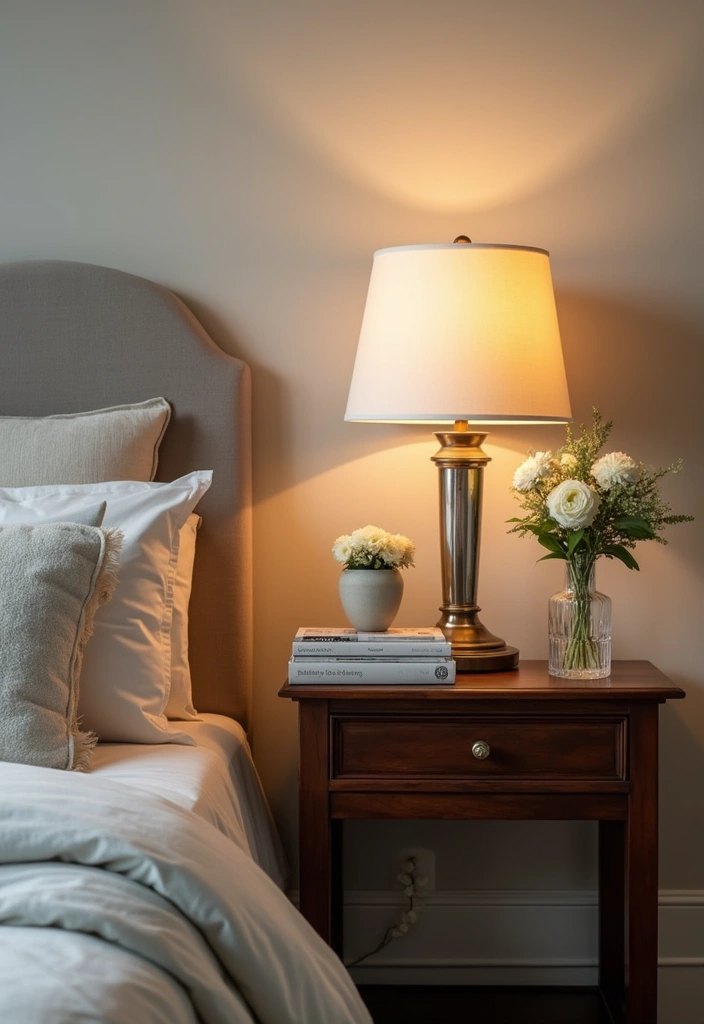
One ceiling light is a interrogation room, not a bedroom. Aim for three sources: the overhead (on a dimmer if you can — a $15 dimmer switch changes everything), a matched pair of bedside lamps for reading, and one low accent — a small lamp on the dresser, fairy lights, a candle (flameless if you fall asleep reading). All bulbs 2700K warm. Bedside lamp shades should sit roughly at chin height when you’re propped up in bed, about 42–48 inches from the floor. Get the light right and most how to decorate your bedroom questions answer themselves.
Step 8: Style the Surfaces (Rule of Three)
Nightstands: three things each, no more — lamp, book or plant, one small personal object. Dresser top: group items on a tray (books + plant + one beautiful thing), leave the rest empty. Empty surface is a design choice; clutter is just unmade decisions. If a chair exists, it gets a cushion and a folded throw — or it leaves. Chairs that hold laundry are storage, and storage belongs behind doors. Surface discipline is the unglamorous half of how to decorate your bedroom well.
Step 9: Art, Plants and the Personal 10%
Now — and only now — the fun layer. Art above the bed: one piece about two-thirds the bed’s width, hung 6–8 inches above the headboard (or a pair that spans the same width). One plant minimum: a trailing pothos on the dresser or a snake plant by the window from our low-maintenance plants list. Then the personal 10%: the framed photo, the travel souvenir, the inherited oddity. A room without this layer is a hotel. A room with too much of it is a museum. Edit until it feels like you on your best day. That editing instinct is the last skill in how to decorate your bedroom — and the one that makes it yours.
If the Money Runs Out: The Spending Order
Decorator’s secret — the steps have a value ranking if you must stop early: bedding first (biggest surface), curtains second (the frame), lamps third (the mood), rug fourth, art last (easiest to add anytime). A room with steps 1–3 and great bedding already looks 70% decorated.
The $150 Starter Version
Duvet cover set in your palette ($30), one textured throw ($15), two cushion covers ($12), two warm bulbs ($8), a pair of curtain panels ($24), one big thrifted print or mirror ($20), a trailing pothos ($10), dimmer or smart bulb for the main lamp ($15), and a tray for the dresser ($8). Total: about $142. One weekend. That’s how to decorate your bedroom when the budget is real — and honestly, it beats most $1,000 rooms that were bought in the wrong order. Proof that how to decorate your bedroom is a method, not a budget.
4 Mistakes Almost Everyone Makes
Buying the decor first. Cushions and knick-knacks are the LAST step because they’re cheapest to adjust. Bought first, they dictate a palette you never chose. Order is everything in how to decorate your bedroom; accessories are punctuation, not the sentence.
The matching furniture set. Bed + nightstands + dresser in identical fake wood reads as a showroom, not a home. Similar tones are fine; identical triplets are the problem.
Skipping the measure step. The rug that’s a foot too small, the dresser that blocks the door swing — both were born in a skipped Step 1.
One pillow, flat, in the middle. The bed is the headline; dress it like one. Two minutes of pillow arrangement is the highest-value daily habit in this whole guide.
Frequently Asked Questions
Where do I start when decorating a bedroom?
Start with Step 1: empty, measure, photograph. Then palette, then layout — all free. The first money should go to bedding and curtains. Most failed bedrooms were decorated in reverse (accessories first), which is why learning how to decorate your bedroom in order matters more than any single purchase.
How much does it cost to decorate a bedroom?
A real transformation is possible at $150 (the starter version above), a comfortable mid-range lands around $400–600 including paint, rug and lighting, and it scales from there. The order you spend in matters more than the total: $150 spent in the right order beats $1,000 spent randomly.
How do I decorate a small bedroom?
Same 9 steps, tighter editing: light palette, curtains hung high to fake height, a rug that still extends past the bed, one statement piece of art instead of many small ones, and closed storage for everything else. Keep the walkway at 24 inches minimum and let the bed be the only “big” thing in the room. The sequence for how to decorate your bedroom doesn’t change with size — only the editing gets stricter.
How can renters decorate a bedroom without painting?
Skip Step 4’s paint and lean on the textile steps: bedding, curtains (tension rods or adhesive hooks), a rug, and a large leaning mirror or print as the focal wall. Everything in the $150 starter version is renter-safe and leaves with you.
The Bottom Line
How to decorate your bedroom isn’t a shopping problem — it’s a sequencing problem. Measure, palette, layout, walls, frame, bed, light, surfaces, personality. Follow the order, spend where the surface is biggest, and stop when it feels like you. The room was never missing money. It was missing a sequence.
Ready for a style direction? The boho bedroom guide and the Christmas bedroom guide both build on these same 9 steps — and the whole bedroom decor collection is there when you want more.