
I killed my first houseplant — a fern — in eleven days. Eleven. I watered it, talked to it, moved it toward the light like a nurse with a patient. It died anyway, and I concluded I had a black thumb. I didn’t. I had a fern: a humidity-loving, schedule-demanding drama queen sold to a beginner as “easy.” Plant choice is the whole game. Pick plants that match your actual life — your light, your forgetfulness, your travel schedule — and low maintenance indoor plants practically decorate your home by themselves.
Below: the 15 I recommend to people who’ve killed plants before. Every entry has honest light needs, a real watering interval, a typical price, and where to put it so it reads as decor, not clutter. At the end: the three mistakes that kill even the unkillable ones.
Start Here: The 10-Second Light Test
Stand in the room at noon and try to read a book without switching on a lamp. Easy? That’s bright light. Possible but squinty? Medium. Forget it? Low light. Now buy for the light you HAVE, not the light the plant tag dreams about. “Bright indirect” — the phrase on half of all tags — means within a few feet of a window with the sun’s direct rays filtered. And one watering rule covers almost everything on this list: poke a finger two inches into the soil; dry means water, damp means walk away. More low maintenance indoor plants die from kindness (overwatering) than from neglect.
The Statement Plants: Big Decor Energy (1–5)
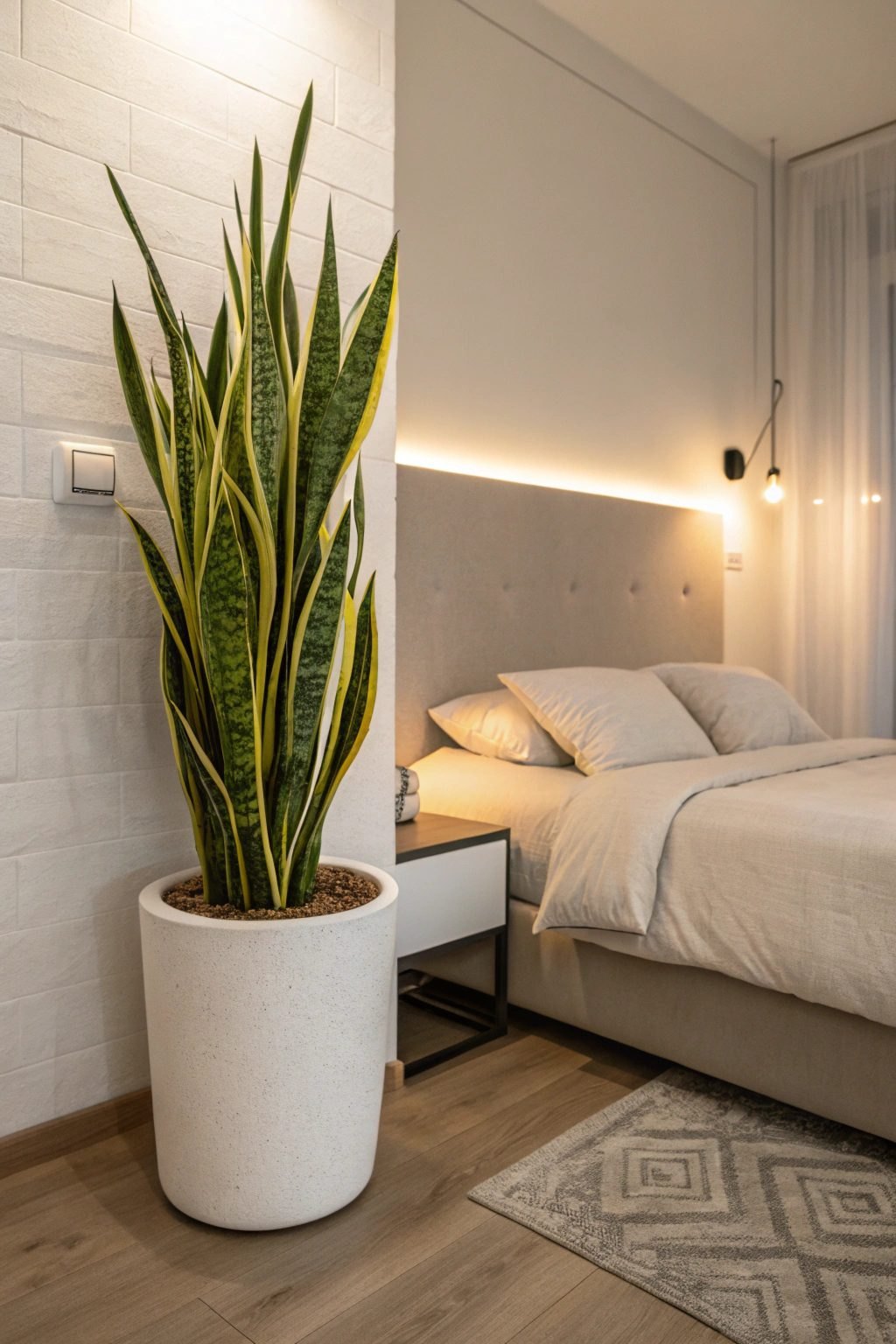
1. Snake plant (Sansevieria). Light: low to bright — the most tolerant plant sold anywhere. Water: every 2–3 weeks. Price: $15–25. Style it: in a tall pot flanking a TV stand or in pairs beside a doorway. Its vertical blades are basically architecture.
2. ZZ plant. Light: low to medium (it tolerates office fluorescence and dim corners). Water: every 3–4 weeks; its rhizomes store water like a camel. Price: $18–30. Style it: on the floor in dark corners where nothing else survives. Glossy leaves, zero demands.
3. Monstera deliciosa. Light: bright indirect. Water: about weekly, when the top two inches dry. Price: $25–40. Style it: this is your statement piece — one monstera in a woven basket makes an ordinary corner look like a magazine shoot. Give it a moss pole when it starts to lean.
4. Rubber plant (Ficus elastica). Light: medium to bright. Water: every 1–2 weeks. Price: $20–35. Style it: those big burgundy-gloss leaves next to a reading chair. Wipe the leaves monthly — dusty leaves can’t photosynthesize, and shiny ones look expensive.
5. Dracaena. Light: medium (direct sun scorches the striped leaves). Water: every 2 weeks. Price: $20–30. Style it: the tall, skinny answer for the awkward gap beside a bookcase. Height without width — gold in small rooms.
The Trailing Plants: Shelves and High Spots (6–9)
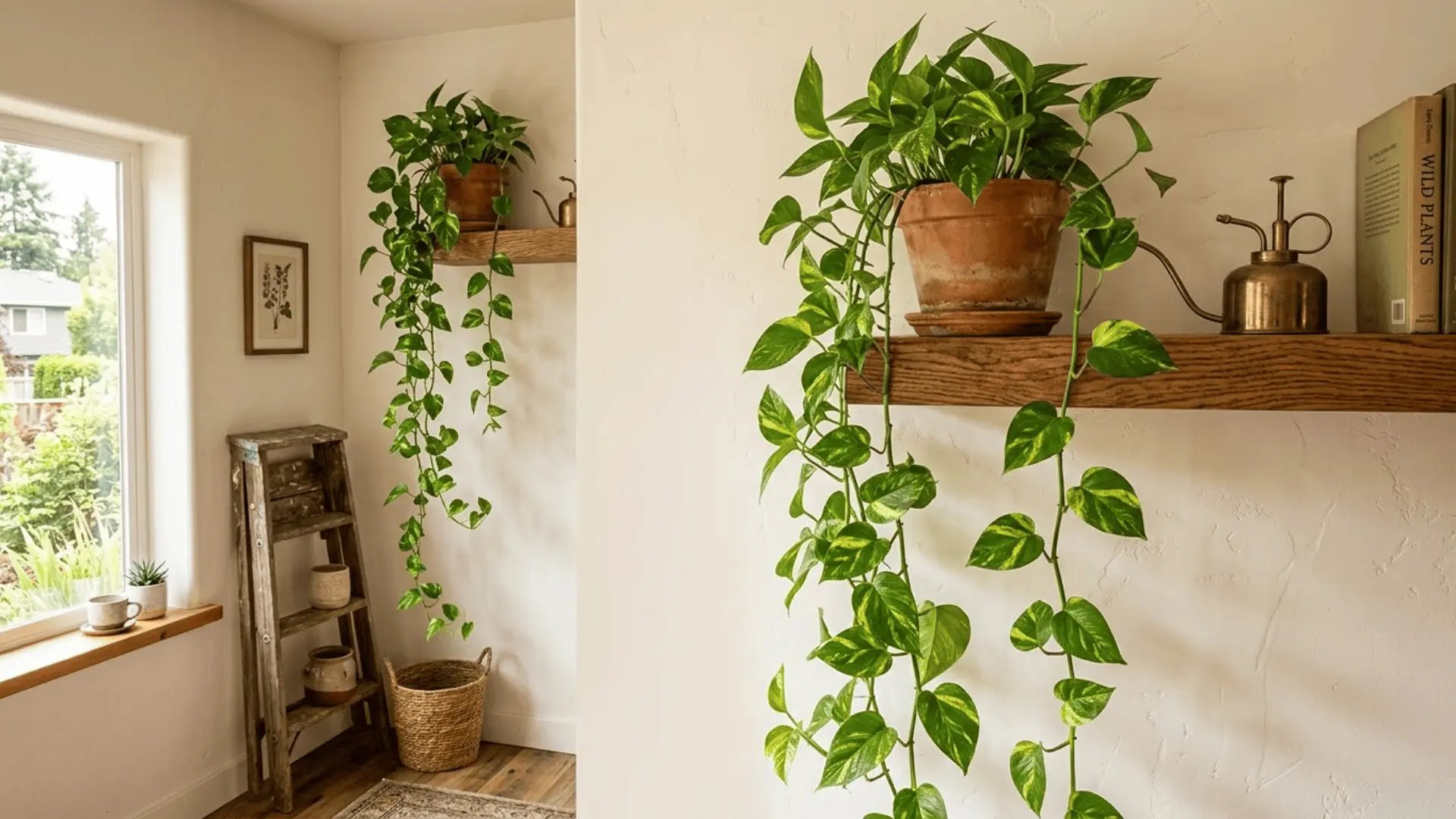
6. Golden pothos. The king of low maintenance indoor plants. Light: low to bright (variegation fades in the dark, growth doesn’t). Water: every 1–2 weeks. Price: $8–15. Style it: on top of a bookcase or high shelf, trails cascading down. Bonus: snip a stem, put it in water, and in a month you have a second plant. Free decor, forever.
7. Heartleaf philodendron. Light: low to medium. Water: weekly-ish. Price: $10–16. Style it: pothos’s softer cousin — smaller heart-shaped leaves, same forgiving soul. Lovely spilling from a hanging planter in a bathroom with a window.
8. Spider plant. Light: medium to bright indirect. Water: weekly. Price: $10–18. Style it: hanging, always hanging — the arching leaves and baby plantlets need air beneath them. Pet-safe, kid-safe, and it manufactures free baby plants to gift.
9. Tradescantia. Light: bright indirect keeps the purple stripes vivid. Water: weekly. Price: $8–12. Style it: purple-and-silver foliage as a color accent on shelves; it grows so fast you’ll be trimming (and propagating) within months.
The Tabletop Plants: Small Spots, Big Effect (10–15)
10. Peace lily. Light: low to medium. Water: weekly — and it’s the one plant that TELLS you: leaves droop dramatically when thirsty, perk up an hour after watering. Price: $15–25. Style it: on a side table where its white blooms do the work of fresh flowers, monthly, for free.
11. Aloe vera. Light: bright. Water: every 3 weeks. Price: $8–14. Style it: a sunny kitchen windowsill — sculptural rosettes plus a burn remedy within reach of the stove. The rare plant that’s also a first-aid kit.
12. Jade plant. Light: bright. Water: every 2–3 weeks. Price: $10–16. Style it: a desk or entry console in a heavy ceramic pot. Slow-growing and long-lived — jade plants get handed down like furniture.
13. Cast iron plant (Aspidistra). Light: low — the darkest-corner champion on this entire list. Water: every 2 weeks, drought-tolerant. Price: $25–40 (slow-growing, hence pricier). Style it: the hopeless hallway corner or north-facing room where everything else has died. Victorian parlors kept these alive by gaslight; your apartment is easy mode.
14. Chinese evergreen (Aglaonema). Light: low to medium. Water: every 1–2 weeks. Price: $15–25. Style it: silver-and-pink patterned leaves on a bedroom dresser — pattern without wallpaper. One of the prettiest truly low maintenance indoor plants sold.
15. Air plants (Tillandsia). Light: bright indirect. Water: no soil at all — soak in a bowl for 20–30 minutes once a week, shake off, put back. Price: $5–10 each. Style it: in glass globes, on driftwood, in a bowl on the coffee table. The gateway plant for people with zero free surfaces.
Styling Rules: How Plants Become Decor Instead of Clutter
Group in threes, at three heights. One floor plant, one on a stand or stool, one trailing from above — a triangle of green reads as a designed vignette; a line of small pots on a windowsill reads as a waiting room.
One big plant beats three small ones. A $30 monstera transforms a corner. Three $10 minis scatter your eye. When budget forces a choice, size wins — the same scale rule as our small apartment living room guide.
Keep pots in one material family. All terracotta, all white ceramic, all woven baskets — pick a lane per room. Matching pots are the cheapest way to make mismatched plants look curated. Trailing pothos up high is also a cornerstone of the boho bedroom look.
Use the cachepot trick. Keep every plant in its plastic nursery pot (with drainage) and drop it inside a prettier pot without holes. Watering becomes foolproof — lift, water in the sink, drain, replace — and no plant ever sits in a puddle.
A Quick Note on Pets
Some beloved plants are toxic if chewed: pothos, monstera, peace lily, snake plant and ZZ among them. Pet-safe picks from this list: spider plant and air plants, plus the parlor palm as a bonus statement option. Check any plant against the ASPCA’s toxic plants database before it comes home to a curious pet — five minutes of checking, total peace of mind.
The 3 Mistakes That Kill “Unkillable” Plants
Overwatering on a schedule. “Every Sunday” is how snake plants die. Roots rot in wet soil while the calendar says you’re being good. The finger test beats any schedule.
Pots without drainage. That gorgeous pot with no hole is a bathtub. Roots drown in it within weeks. Cachepot method or drill the hole — no third option.
Repotting on day one. A new plant is already stressed from the move. Leave it in its nursery pot for at least a month, ideally a full season, and let it settle. Most “I repotted it and it died” stories start here.
Frequently Asked Questions
What is the lowest maintenance indoor plant of all?
The ZZ plant and the snake plant tie for the title: both tolerate low light and need water only every 3–4 weeks (ZZ) or 2–3 weeks (snake plant). If you travel often or forget plants exist, start with one of these two — they are the closest thing to set-and-forget decor.
Which low maintenance indoor plants are best for low light?
Cast iron plant first — it thrives where others merely survive — then ZZ plant, snake plant, pothos and Chinese evergreen. True low light slows growth on all of them, but these five keep their looks in north-facing rooms and interior corners.
How often should I water low maintenance indoor plants?
Forget fixed schedules: most need water every 1–3 weeks depending on the plant, the pot and your home’s humidity. Use the finger test — top two inches dry means water thoroughly until it drains, then empty the saucer. Overwatering kills more low maintenance indoor plants than drought ever will.
Are low maintenance indoor plants safe for cats and dogs?
Some are, some aren’t. Spider plants and air plants are pet-safe; pothos, monstera, peace lilies, snake plants and ZZ plants are toxic if eaten. If your pet chews leaves, choose from the safe list or place toxic plants well out of reach.
The Bottom Line
You don’t have a black thumb. You had the wrong plants. Match one statement plant and a couple of trailers to your real light, water by the finger test, and your home gets the living, breathing layer that no cushion or print can fake — for about the price of one throw pillow per plant. Start with a pothos and a snake plant this weekend; they’re the two easiest wins in all of economy home decor.
More green-fingered, small-budget ideas are in our budget home decor collection.