
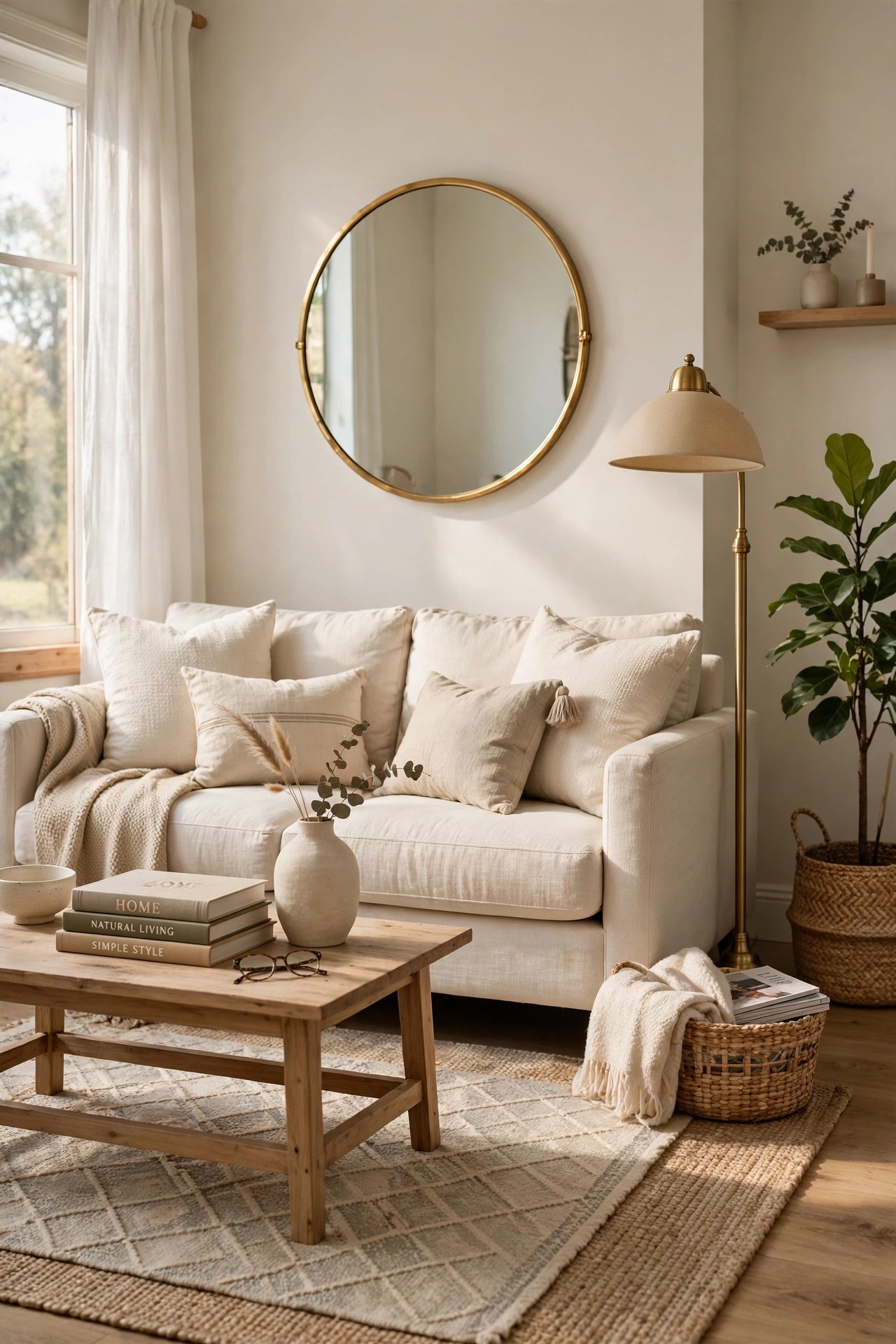
Here’s something nobody tells you about expensive-looking houses: most of them aren’t filled with expensive things. They’re filled with ordinary things arranged by someone who understood light, space and restraint. I learned this walking through a model home years ago, then going home and realizing the model home’s sofa probably cost less than mine. The difference was everything around it.
Expensive is a look, not a price tag. It comes from warm light, breathing room, matching tones, and surfaces that look chosen instead of accumulated. Every one of those is free or cheap. Below are 30 ways to make your house look expensive on a budget — grouped by where they work, priced honestly, and ordered so the free stuff comes first. Pick any five and your house will fool people by the weekend.
Start Where Guests Start: First Impressions (1–5)
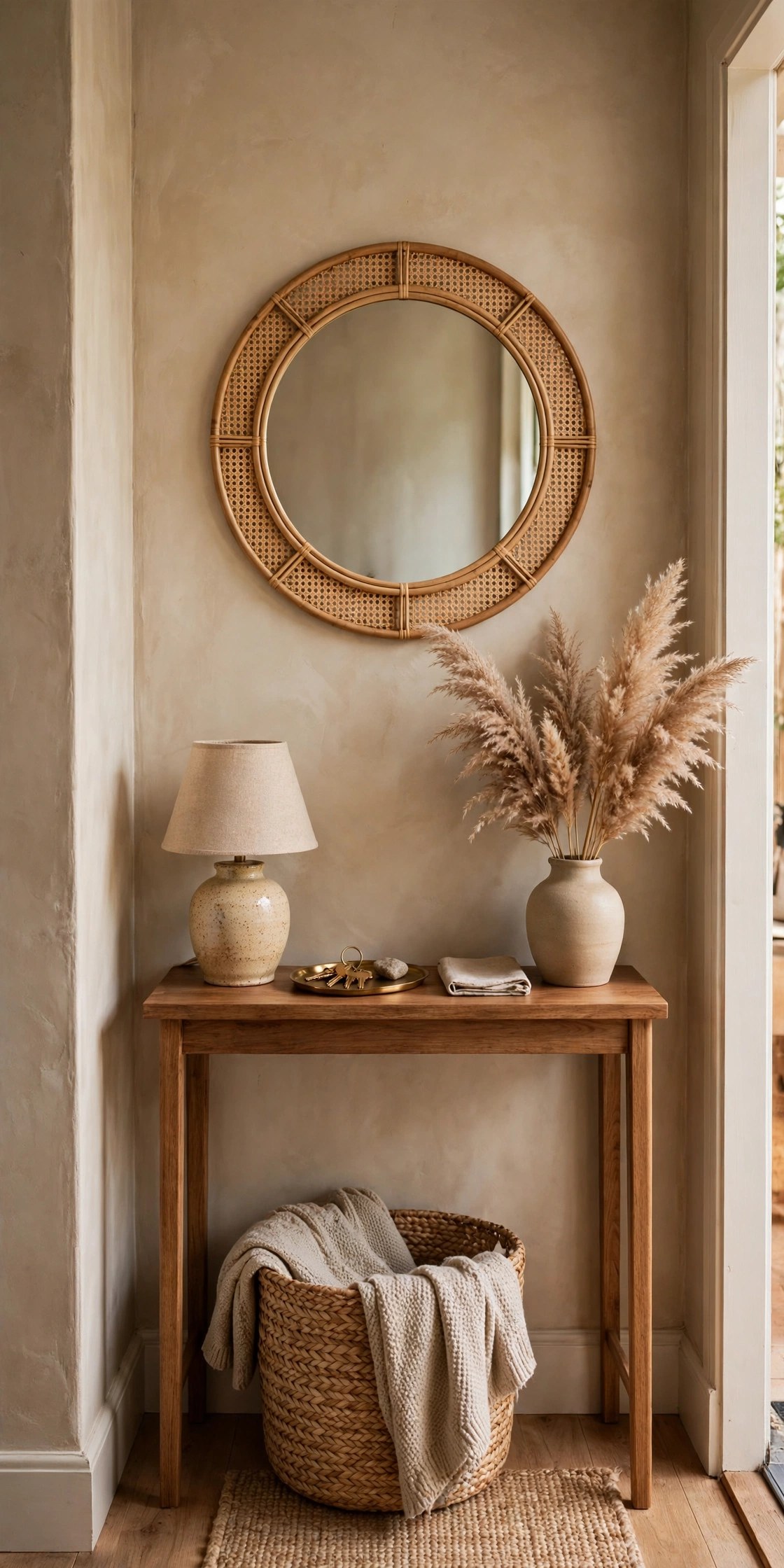
1. Give the entryway one moment. A small table or even a wall shelf, one mirror or piece of art above it, a tray for keys, one plant or vase. Guests decide how your house “feels” in the first eight seconds. A composed entry says the rest of the house is composed too.
2. Clear the fridge front. Magnets, school papers, takeout menus — visual noise in the hardest-working room. One small magnetic board inside a cabinet door holds it all. A clean fridge front makes an ordinary kitchen look strangely high-end, and it costs nothing.
3. Pick one signature scent. Expensive homes smell like one thing, consistently — a candle, a reed diffuser, simmering citrus on the stove. Rotating five different plug-in fragrances smells like a store aisle. One scent, every room, subtle.
4. Match the towels. In the bathroom guests use, hang a set of same-color, decent-weight towels — white or deep neutral. A $12 two-pack folded in thirds on the rail reads “hotel.” Four mismatched beach towels read “laundry day,” even when they’re clean.
5. Corral the daily clutter in baskets. Remotes, chargers, mail, dog toys. Woven baskets in the same family (three sizes, one material) turn mess into a styling decision. About $3–5 each at thrift and dollar stores.
Light and Paint: The Two Biggest Liars (6–11)
6. Make every bulb warm white. Mixed color temperatures — one daylight-blue bulb, one yellow — make rooms look subtly wrong. All 2700K warm white, everywhere, is the cheapest cohesion money can buy: about $8 for a four-pack of LEDs.
7. Light in layers, at three heights. One harsh ceiling light flattens everything. Add a floor lamp, a table lamp, and something low like candles, and the same room looks designed. Thrifted lamps run $5–8; the glow is worth ten times that.
8. Paint one wall a deep, confident color. Forest green, charcoal, navy, warm clay — a single moody wall behind the sofa or bed makes everything in front of it look pricier. One gallon, about $40, one afternoon.
9. Paint a door. An interior door in black or deep green with the trim left white is a designer move that costs a quart of paint and looks like architecture. Hallway doors are the safest place to try it.
10. Replace the worst light fixture. Every house has one — the builder-grade dome or the sad chandelier. A secondhand fixture for $15–25 (marketplace is full of them) in the entry or dining room upgrades the whole ceiling line.
11. Use real candlelight somewhere. A cluster of unscented pillars on a tray or mantel. Candlelight is the oldest luxury effect there is, and a bag of pillars costs less than lunch. My dining table decor guide is basically an essay on this point.
Furniture and Layout: Space Is the Luxury (12–16)
12. Pull furniture off the walls. Three inches of air behind the sofa and the room suddenly has a plan. Free, instant, and the single layout change that separates “furnished” from “designed.”
13. Let one anchor piece carry each room. A solid-wood thrifted dresser, a real-leather chair, one good rug. Thrift stores like Goodwill hide them weekly; an ugly finish on solid wood is a $40 bargain, not a flaw. Everything else in the room can be cheap if the anchor is real. That’s how you make your house look expensive on a budget, one room at a time.
14. Show some leg. Furniture that sits on visible legs looks lighter and more tailored than skirted, floor-hugging pieces. Swap a fabric skirt for legs on a bed or sofa where you can, and let air flow underneath.
15. Keep wood tones in one family. Warm woods with warm, cool with cool. A room where the floor is orange-oak, the table is grey-wash and the shelf is espresso looks accidental. You don’t need matching — you need related.
16. Defend the empty space. Remove two objects from every room and don’t replace them. Luxury is unhurried; clutter is the opposite of expensive no matter what the clutter cost.
Textiles That Whisper Money (17–20)
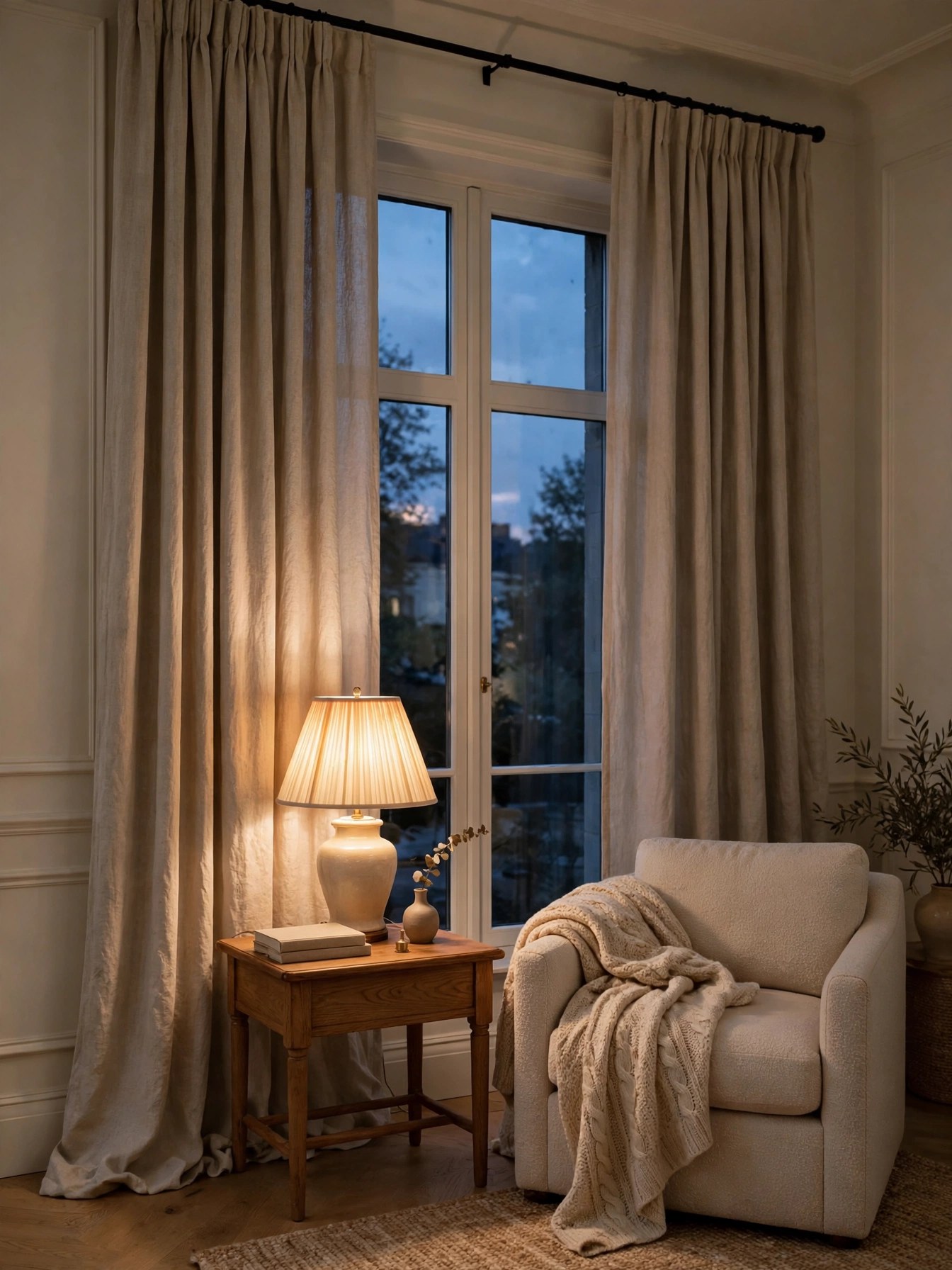
17. Hang curtains high, wide and long. Rod near the ceiling, panels wider than the window, hems brushing the floor. Short curtains hung on the frame are the fastest tell of a budget room. Linen-look panels run about $12 each and transform the wall they hang on.
18. Cover pillows in natural fabrics. Linen, cotton, wool-look weaves in solid colors or quiet stripes. Shiny polyester covers with printed slogans are the other fast tell. Covers cost $4–6; keep your old inserts.
19. Size the rug up. A rug should fit the front legs of the sofa and chairs, minimum. The postage-stamp rug is a classic budget mistake — a bigger secondhand rug (mine was $60) anchors a room like furniture.
20. Fold the throw like you meant it. Over the arm of the sofa, folded lengthwise, or across the foot of the bed in a neat band. A balled-up blanket reads as a nap site. A folded one reads as styling. Four seconds, zero dollars.
Walls and Windows: Where Eyes Land (21–24)
21. Hang one oversized piece of art. Big reads confident; a scattering of small frames reads uncertain. A $10 thrifted canvas, a framed textile, even your own abstract in leftover paint — at three feet wide, it becomes the room’s opinion.
22. Or unify a gallery wall. Many small pieces work when the frames share one color and the spacing is a consistent two inches. Chaos is fine; accidental is not. My style savings guide breaks down the $15 version of this wall.
23. Put a mirror opposite a window. It doubles the daylight, reflects the view, and makes the room feel twice its size. Large thrifted mirrors cost $10–15 and do more per dollar than almost anything on this list.
24. Clean the windows and iron the curtains. Unglamorous, undeniable. Glass you can see through and curtains without packaging creases make sunlight look expensive. Free, and nobody does it — which is exactly why it works.
Small Details, Big Signals (25–28)
25. Match the hangers. In any closet a guest might open, swap the wire-and-plastic mix for one set of wooden or velvet hangers. Uniform hangers make ordinary clothes look like a boutique rail. A 20-pack costs about $10.
26. Decant the everyday bottles. Hand soap, dish soap, shampoo and cotton balls into simple glass or ceramic containers. Product packaging is designed to shout; decanting turns the volume off. Dollar-store dispensers do the job for $1.25 each.
27. Style shelves with the rule of one. Books stacked or standing, then ONE object — a vase, a small sculpture, a plant. Shelves stuffed edge to edge look like storage; shelves with air and one confident object look curated.
28. Make storage match. Pantry jars in one style, baskets in one material, boxes in one color family. Matching storage is invisible organization, and it’s why expensive kitchens look calm even when they’re small.
Habits of Houses That Look Expensive (29–30)
29. Do the ten-minute nightly reset. Cushions straightened, surfaces cleared, throw folded, dishes done. Expensive-looking homes aren’t cleaned more heroically — they’re never allowed to slide. Ten minutes a day beats a monthly panic.
30. Buy slowly, from a list. The collected look takes a season, not a Saturday. Keep measurements and a hunting list on your phone, and let thrift stores and marketplaces come to you. This patience is the entire engine behind economy home decor — the rooms that look richest are almost always the ones assembled, not purchased.
5 Things That Instantly Make a House Look Cheap
Fair warning — these undo the 30 above faster than you’d think: harsh blue-white bulbs in a warm room; curtains hung short on the window frame; furniture sets bought as a matching trio; surfaces covered in small novelty decor; and plastic anything pretending to be a natural material (fruit, plants, “marble”). Fix even two of these and the whole house levels up — they quietly undo every effort to make your house look expensive on a budget.
Frequently Asked Questions
What is the cheapest way to make your house look expensive on a budget?
Fix the light. All warm-white bulbs plus one lamp in every dark corner costs under $25 total and changes how every single room reads. After that: edit clutter, pull furniture off the walls, and hang the curtains properly — all free.
Which room should I start with?
The one guests see first — usually the living room, with a quick pass on the entryway and guest bathroom. A composed entry, a calm living room and matching bathroom towels create the impression for the whole house.
What colors make a house look expensive?
Warm neutrals — greige, cream, soft white — layered with different textures for the big surfaces, and one deep color (forest, navy, charcoal, clay) used deliberately on a wall, door or cabinetry. The trick is cohesion: few colors, repeated often.
Do I have to buy everything new to get this look?
The opposite. The richest-looking rooms mix a few new basics (bulbs, curtains, pillow covers) with thrifted anchors — solid wood, brass, real mirrors and ceramics. Secondhand pieces bring the character; new basics bring the polish.
The Bottom Line
To make your house look expensive on a budget, you don’t need a shopping spree. It’s not a shopping problem. It’s an editing problem, a lighting problem and a patience problem — and all three are free to fix. Start with the bulbs, the curtains and the clutter this week. Then hunt slowly for the good stuff. Your house already has most of what it needs; it just needs you to arrange it like you meant it.
Want the room-by-room version of this system? Browse our budget home decor ideas — every guide is built on the same rule: style first, spend second.