
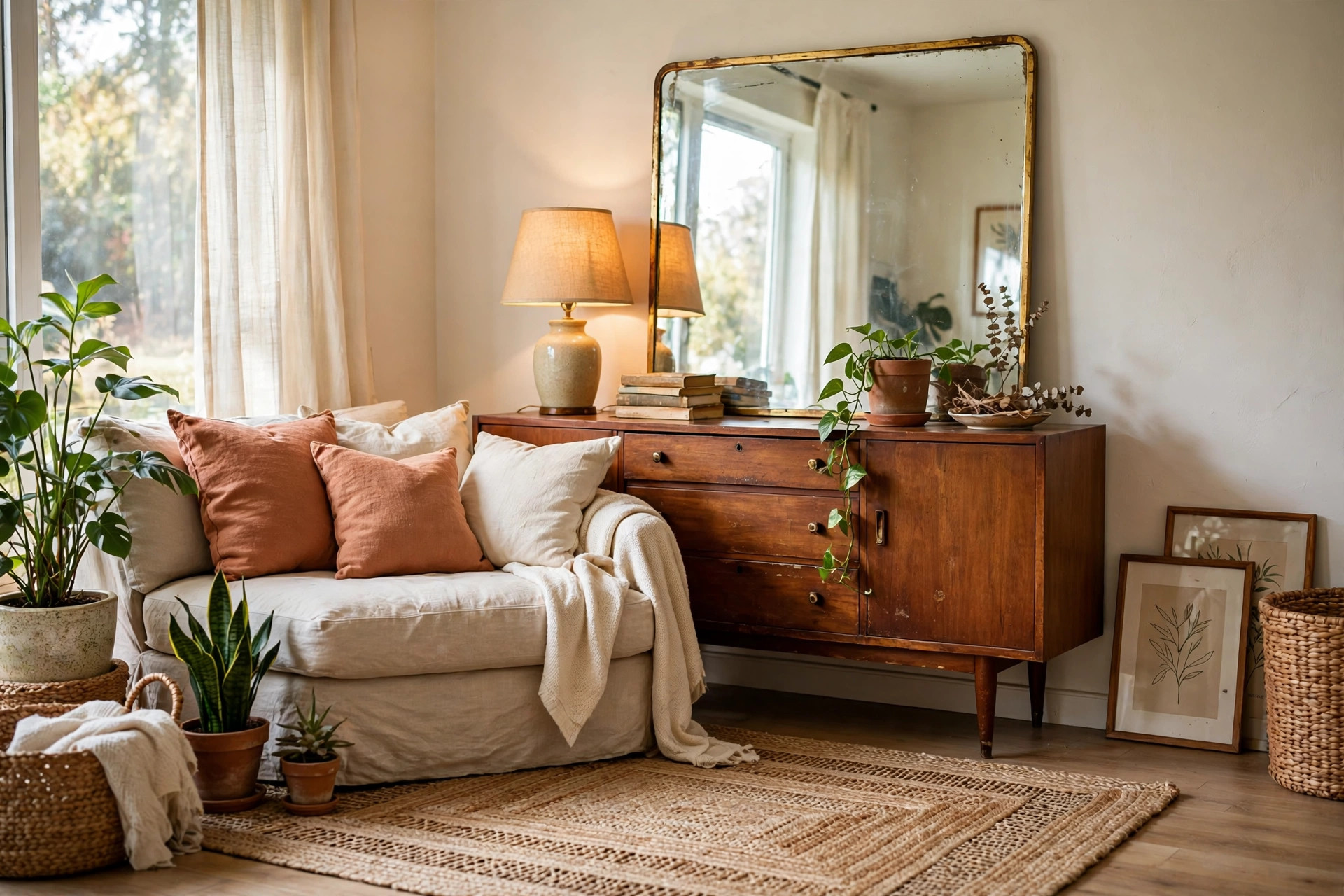
Last spring I redid my living room for $250. Not “influencer $250” where the sofa was already $3,000 — actual $250, receipt by receipt, in a room with a sagging couch and beige walls I was tired of apologizing for. Friends who visited assumed I’d spent four times that. The difference wasn’t talent. It was knowing where money shows and where it disappears.
That’s what style savings means. It’s not buying the cheapest version of everything — that’s how rooms end up looking cheap. Style savings is a strategy: spend on the few things eyes actually land on, save ruthlessly on everything else, and use free styling tricks to do the heavy lifting. Here are the 19 moves that matter, the real budget I used, and the skip list that saves more money than any coupon.
First, the Style Savings Math
Every room has the same anatomy. Roughly 70% of what makes it look good is free or nearly free: arrangement, editing, light, cleanliness, cohesion. About 20% is cheap buys done right — paint, textiles, bulbs. Only 10% is worth real money, and it’s almost never decor objects. It’s the one piece the room revolves around.
Here’s my actual $250 living room, so you can see the split in the wild:
| Item | What I paid |
|---|---|
| Paint, one accent wall + trim (gallon + supplies) | $46 |
| Curtains, two linen-look panels, hung high and wide | $24 |
| Four pillow covers (kept my old inserts) | $18 |
| Thrifted brass floor lamp + warm bulb | $11 |
| Large thrifted mirror for over the sofa | $14 |
| Thrifted frames × 6 for a gallery wall (prints were free printables) | $9 |
| One big plant + one trailing plant | $21 |
| Secondhand wool rug (marketplace find) | $60 |
| Baskets, books, ceramics from thrift + dollar stores | $17 |
| Warm bulbs for the remaining lamps | $8 |
| Total | $228 |
I came in under budget and the rug — the single “splurge” — is what everyone compliments. That’s style savings in action — and the 70/20/10 rule doing its job. Now the moves themselves.
Free First: The Moves That Cost $0 (1–5)
1. Shop your own home before any store. Walk every room with a basket and collect anything not earning its place — the vase in the guest room, the bowl in the hallway. Redistribute. Half of my “new” living room decor came from my own bedroom shelves. This is rule one of economy home decor too, because it works every single time.
2. Pull the furniture off the walls. Even three inches of breathing room behind a sofa makes a room look planned instead of parked. Free, takes ten minutes, changes the whole geometry.
3. Edit out two things per room. Expensive-looking rooms have empty space in them. Remove the two weakest objects from every room — not forever, just out. What remains instantly looks more expensive because it can be seen. Editing is the purest form of style savings — it pays you in space.
4. Swap decor between rooms. The lamp you’re bored of in the bedroom looks brand new in the living room. Your eyes stop seeing decor after about a month; moving it is a free refresh.
5. Style your surfaces like you mean it. One stack of books, one candle, one small plant on the coffee table — grouped, with space around them. A styled surface reads “designed.” A crowded one reads “storage.” This takes four minutes and costs nothing you don’t already own.
Thrift Smarter: Where the Real Savings Live (6–10)
6. Buy ugly-finish solid wood. A scratched solid-wood dresser for $40 is a weekend of sanding and stain away from looking like a $600 piece. The rule: if it’s heavy, real wood, and structurally sound, the finish doesn’t matter. Paint and stain are the cheapest transformations in all of decorating.
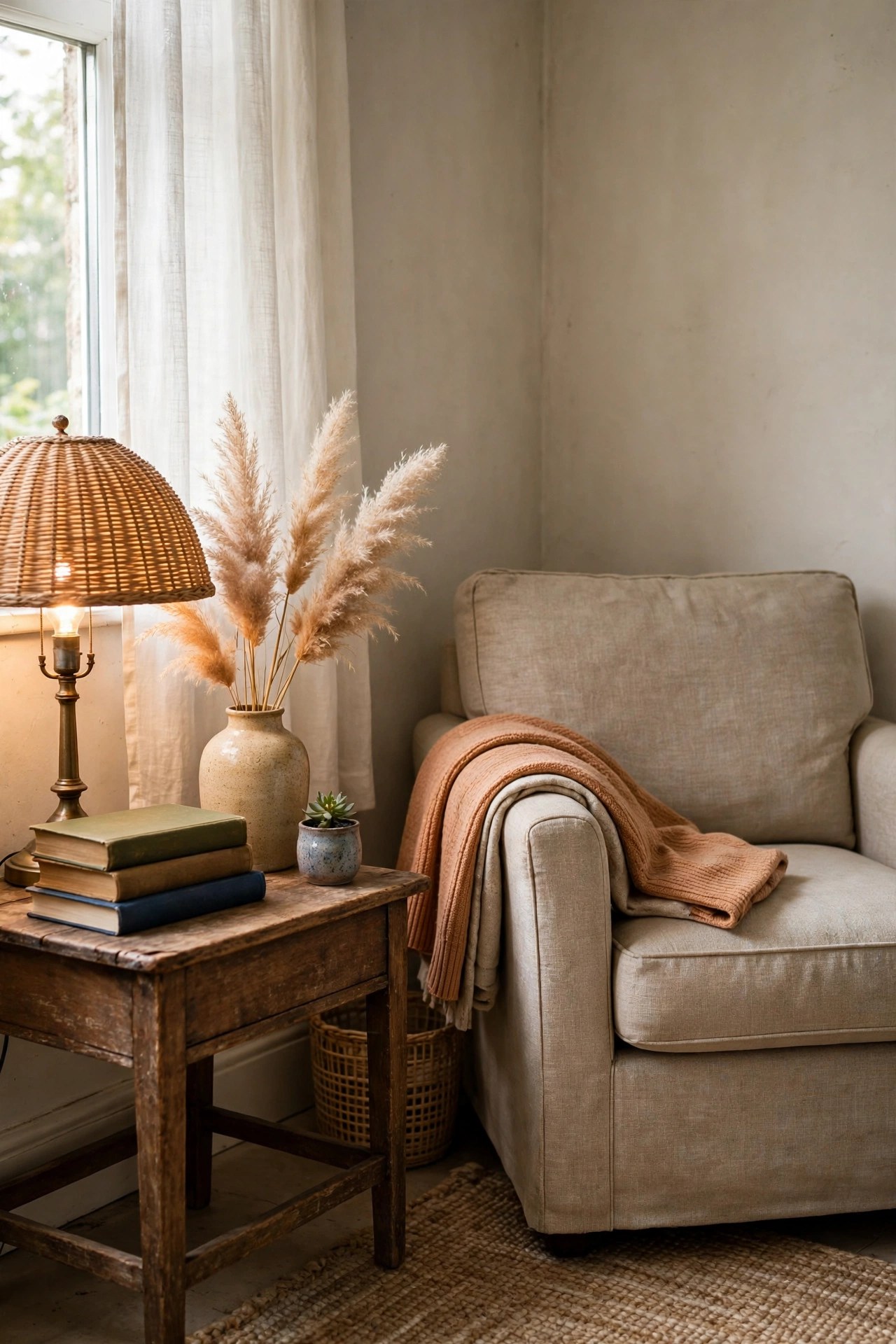
7. Lamps are the thrift store’s gift. Good lamps are expensive new and nearly free used — I’ve never paid more than $8 for one. Check the cord, add a warm bulb, and a $70 look lands on your side table. Don’t fear the “old lamp” look; brass and ceramic bases are timeless.
8. Frames first, art second. Thrift stores sell frames for $1–3 that cost $15 new. Buy the frames in mixed styles, spray them one color if you want cohesion, and fill them with free printable art or your own photos printed at home.
9. Mirrors do double shifts. A big thrifted mirror over a sofa or mantel bounces light, doubles your candles at night, and makes small rooms feel twice the size. $10–15 used; $80+ new for the same glass.
10. Baskets and ceramics hide the evidence. Remotes, chargers, blankets, the dog’s toy collection — a $3 basket makes clutter look like a styling choice. Real ceramic vases and pots (heavy, matte, imperfect) read expensive; thin glossy ones read dollar store. Buy the heavy ones. Heavy, real, secondhand: that’s style savings in three words.
Cheap Buys With Expensive Results (11–15)
11. Paint one wall, not four. One gallon, one afternoon, one wall behind the sofa or bed. Deep green, warm greige, soft clay — a single intentional wall changes a room’s whole mood for about $40, and it’s the first thing guests notice.
12. Hang curtains high and wide. Rod six inches above the frame and wider than the window, panels kissing the floor. This makes ceilings look taller and windows look bigger, and it’s the most repeated designer trick in existence because it works. Linen-look panels run about $12 each.
13. Buy pillow covers, not pillows. Covers zip off, wash, and swap with the seasons for $4–6 each. A sofa with four fresh covers in two coordinating fabrics looks reupholstered. It isn’t. Nobody knows.
14. Fix the light temperature. Mixed bulbs — one blue-white, one yellow — make any room look wrong in a way people feel but can’t name. All warm white (2700K) everywhere makes rooms feel cohesive and calm, and the U.S. Department of Energy’s LED guide will walk you through choosing bulbs if the packaging confuses you. Eight dollars well spent.
15. One big plant beats five small ones. A single tall plant in a dead corner fills space, adds height, and reads as a design decision. Five tiny succulents read as a collection you’re apologizing for. Snake plants and pothos forgive neglect, which is the only plant requirement that matters in my house. Big, living, cheap — classic style savings.
Walls That Look Collected, Not Copied (16–17)
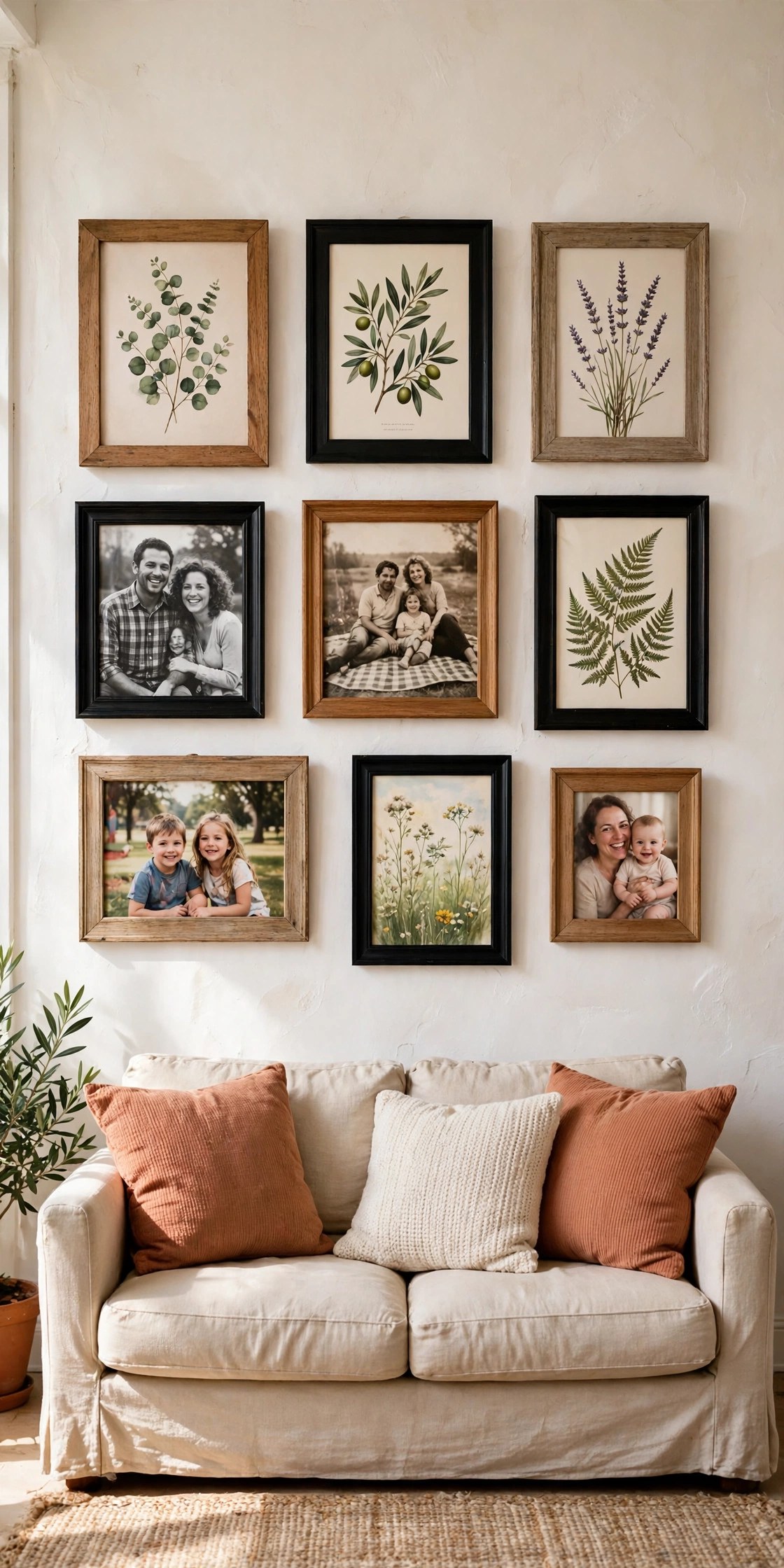
16. The thrifted gallery wall. Six to nine frames, one paint color uniting them, prints or photos you actually care about. Lay the arrangement on the floor first, photograph it, then hang. Total cost can stay under $15, and it’s the wall treatment visitors ask about most.
17. Go oversized with DIY art. Small art looks timid; one big piece looks confident. A $10 thrifted canvas frame + a printed textile, a shower curtain with a great pattern stretched over a frame, or your own abstract painted in leftover wall paint — at 36 inches wide, everything looks like art.
Habits That Keep the Savings Compounding (18–19)
18. Keep a hunting list, not a shopping cart. Write down the five things your rooms actually need, with sizes. Then thrift and marketplace-shop only from the list. The perfect $12 mirror finds you in week three — but only if you knew you were hunting it. Impulse decor is how budgets die. Lists are how style savings survives.
19. Rotate a seasonal box instead of buying seasonal decor. One storage box: a plaid throw, amber glass, pinecones for fall; shells and a blue vase for summer. Swapping layers over the same neutral base makes the house feel freshly decorated four times a year for almost nothing. My dining table decor guide runs on exactly this trick.
The Skip List: Where Style Savings Go to Die
Matching furniture sets. The sofa-loveseat-armchair trio from one showroom floor is the fastest way to make a room look like a waiting room. Mixed, collected pieces always look richer.
Cheap versions of statement pieces. A flimsy $30 chandelier or a paper-thin rug doesn’t save money — it spends $30 announcing itself as fake. Leave the spot empty until the real thing shows up secondhand. Empty beats obviously-cheap, every time.
Baskets of tiny trendy accessories. Twelve small fast-fashion ornaments date within a year and read as clutter in the meantime. One good object beats twelve novelties.
New pillows, new “decor bundles,” new anything sold as a set. Sets are priced for convenience, and convenience is the opposite of savings. Buy the pieces separately, thrifted first.
Frequently Asked Questions
What does “style savings” actually mean?
Style savings is the strategy of getting a high-end look for far less money by spending in the right order: free styling first, thrifted and secondhand second, cheap high-impact basics third, and real money only on the one or two pieces a room revolves around. It’s the opposite of buying everything cheap — cheap everything is exactly what looks cheap.
How can I make my home look expensive on a budget?
Do the free things first: edit clutter, pull furniture off the walls, style surfaces in groups of three. Then fix light (all warm 2700K bulbs, a lamp in every dark corner), hang curtains high and wide, and add one big mirror or plant. Those six moves cost under $60 combined and change a room more than $600 of random accessories. That’s the heart of style savings: order matters more than budget.
What should I buy first when decorating on a budget?
In this order: paint for one wall, curtains hung correctly, pillow covers, warm bulbs, then the thrift hunt — a lamp, a mirror, frames. Save furniture for last and buy it secondhand. The full priority system, with room-by-room ideas, is in our budget home decor category.
How much does it cost to refresh one room?
A real cosmetic refresh — paint, textiles, lighting fixes, thrifted accents — lands between $150 and $300 for most rooms if you thrift the big pieces. My living room cost $228 including a $60 secondhand rug. Bedrooms usually cost less; they’re mostly textiles.
The Bottom Line
Style savings isn’t a coupon code. It’s a habit: look at your own home first, thrift with a list, fix the light, and let one good piece carry each room. Do that for a season and people will start asking which designer you used. The answer — “me, and about $250” — never gets old. And like every good habit, style savings compounds.