
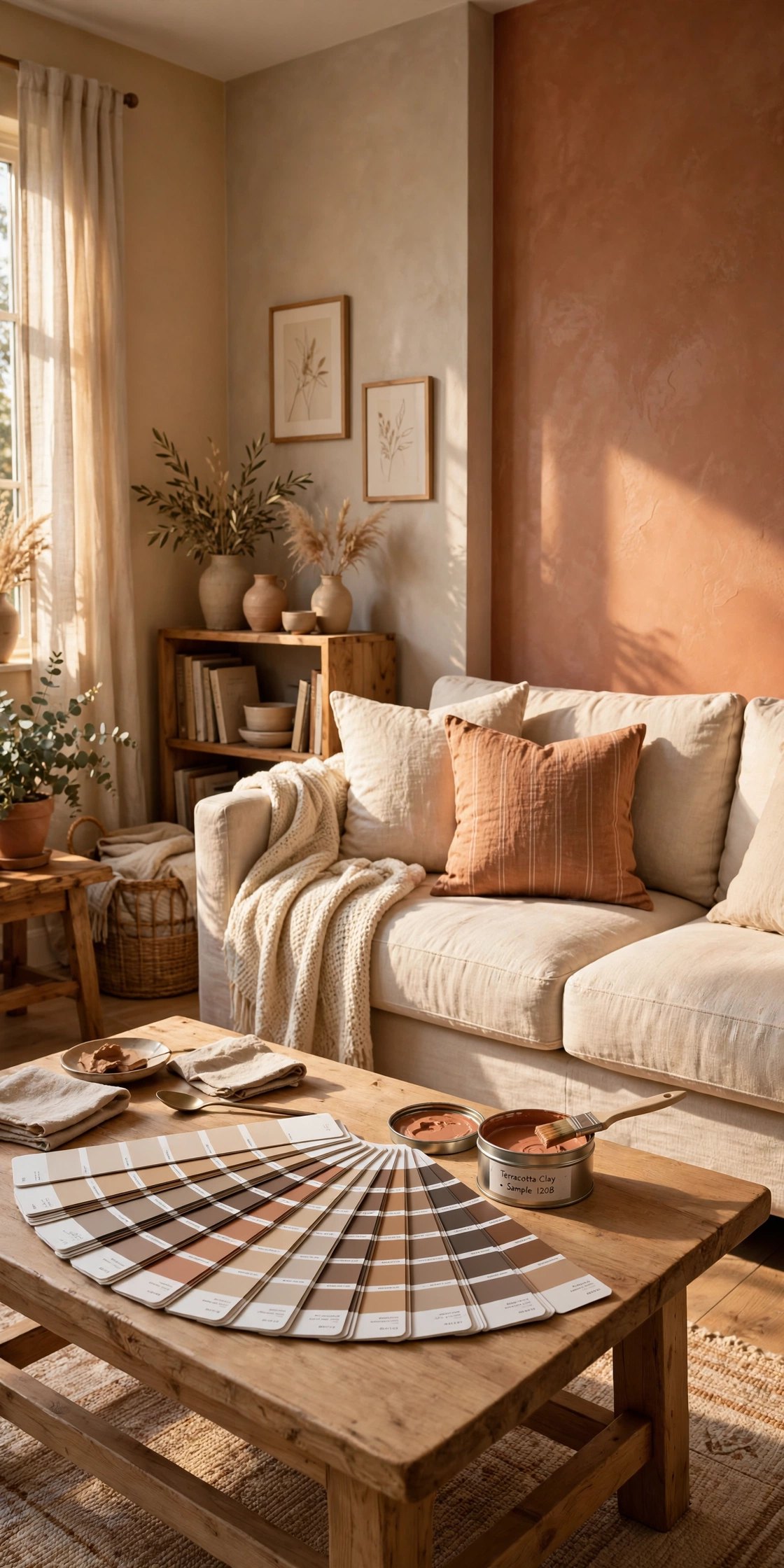
I once painted a whole living room from a paint chip the size of a postage stamp. The chip said warm greige. The wall said orange. Not a subtle orange — a traffic-cone-adjacent orange that changed with the light and mocked me at every hour of the day. Repainting cost me a weekend and about $85, and it taught me the only lesson that matters about cozy paint colors: the color on the chip is not the color on your wall. Your light decides the rest.
The good news: choosing cozy paint colors is a system, not a talent. Five steps, a few numbers, and a short list of shades that have been forgiving people like me for years. Here’s the whole method, plus what a cozy room actually costs to paint.
Why Some Rooms Feel Cold (It’s Physics, Not Taste)
Every paint color has an undertone — a whisper of yellow, pink, blue or green under the main shade — and every room has light with its own color. North-facing light is cool and blue-ish. Afternoon sun is warm and golden. When a cool-undertone color meets cool light, the room feels like an office fridge. Warm undertones (yellow, red, peach) absorb that blue and hand back coziness. That’s the entire science of cozy paint colors: warm undertone, matched to your light, at the right depth. The system below just makes it foolproof.
The 5-Step System for Choosing Cozy Paint Colors
Step 1 — Do the paper test. Take your paint chip and lay it on a sheet of bright white printer paper in daylight. The undertone jumps out instantly: the “white” chip turns creamy, pinkish or faintly blue against true white. For cozy paint colors you want the chips that lean cream, peach or warm beige — never the ones that lean blue-gray.
Step 2 — Check which way your windows face. North-facing room? Your light is cool all day, so go one step warmer than the chip you like. South-facing? Golden light adds warmth for free, so a balanced greige won’t turn yellow. East rooms are warm in the morning, cool by evening; west rooms the reverse. Paint for the hour you actually use the room.
Step 3 — Learn one number: LRV. Light Reflectance Value, printed on the back of most chips and every brand’s website, runs 0 (black) to 100 (white). For cozy-but-not-dark living spaces, LRV 55–80 is the sweet range. Below 40, you’re in cocoon territory — gorgeous on one accent wall, risky on all four in a small room. Cozy paint colors for whole rooms mostly live between 50 and 82.
Step 4 — Start from proven shades, not the whole wall of chips. There are 3,500 colors in a paint store. About a dozen warm shades account for most of the cozy rooms you’ve ever admired. Section below: the nine I recommend first, with brand names and codes so you can order samples today.
Step 5 — Test like you mean it. Sample pots run $6–9. Buy two, maybe three candidates. Paint a square at least 2×2 feet, two coats, on the wall that gets the most light AND the wall that gets the least. Live with it 24 hours. Check it at breakfast, at noon, and under your evening lamps. The winner announces itself. Skipping this step is how I bought the orange — the $9 quart I “saved” cost me $85 to undo.

9 Cozy Paint Colors That Rarely Miss
1. Sherwin-Williams Alabaster (SW 7008), LRV 82. The warm white that behaves. Creamy without going yellow, it makes whole houses feel like morning light. Best for: living rooms, hallways, anywhere you want cozy and bright at once.
2. Benjamin Moore Swiss Coffee (OC-45), LRV 82. The other great warm white — a touch deeper and milkier than Alabaster. North-facing rooms love it. Best for: bedrooms and low-light spaces that need warmth without darkness.
3. Sherwin-Williams Accessible Beige (SW 7036), LRV 58. The greige workhorse. It reads beige in warm light, soft gray in cool light, and never fights with wood furniture. Best for: open-plan living rooms where one color has to hold the whole floor together.
4. Benjamin Moore Revere Pewter (HC-172), LRV 55. A deeper, moodier greige with a green-gray soul. Best for: dining rooms and living rooms with good windows, where you want the walls to feel like an embrace, not a backdrop.
5. Sherwin-Williams Shoji White (SW 7042), LRV 74. Halfway between warm white and greige — the “I can’t decide” color that somehow always works. Best for: rentals and first apartments, because it flatters every cheap sofa ever made.
6. Benjamin Moore Smokey Taupe (983), LRV ~48. Mushroom, in the best way. Rich, earthy, sophisticated. Best for: a cozy bedroom’s main color when you want depth without going dark.
7. Sherwin-Williams Evergreen Fog (SW 9130), LRV 30. A muted sage that feels like a deep breath. Best for: bedrooms and reading corners; pair it with cream bedding and it turns into a boutique hotel. (It also loves the earthy palette in our boho bedroom guide.)
8. Sherwin-Williams Cavern Clay (SW 7701), LRV 20. Terracotta with its sleeves rolled up. Too much for four walls in a small room, unbeatable on one. Best for: the wall behind the sofa or dining table, especially with warm wood and black accents.
9. Sherwin-Williams Urbane Bronze (SW 7048), LRV 8. Near-black brown-bronze. Used on the wall behind a bed or inside a study nook, it’s a cocoon. Best for: accents only — and in those spots, nothing cozier exists.
Room-by-Room Cheat Sheet
Living room: a mid warm neutral (Accessible Beige, Shoji White) with a warm-white ceiling. Add depth through textiles, not darker walls.
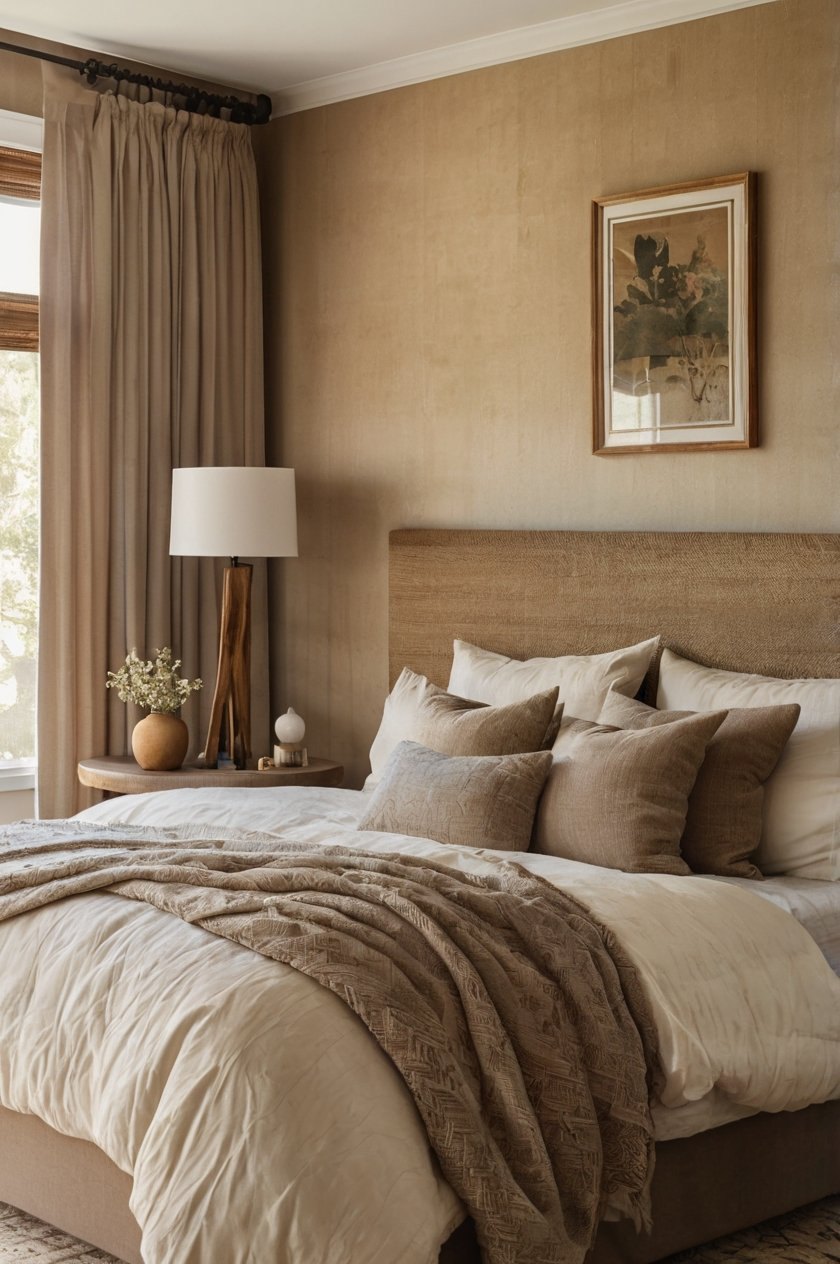
Bedroom: go one shade softer and deeper than your living room — Swiss Coffee, Smokey Taupe, or Evergreen Fog if you’re brave. Bedrooms forgive darkness; sleep likes it.
Small or dark room: stay LRV 65+ and warm. Light cozy paint colors plus layered lamps beat a mid-tone room with one harsh ceiling light every time — same principle as our small apartment living room guide.
North-facing room: add warmth twice — warm undertone AND, if you’re between two shades, pick the warmer one. Your light will cool it back down.
Rental: if you can’t paint walls, paint furniture. A thrifted dresser in Cavern Clay or a bookcase in Evergreen Fog gives you 80% of the color effect and travels with you. More renter-proof upgrades live in our economy home decor pillar guide.
The Cozy Multiplier: Finish and Light Bulbs
Two rooms in the identical color can feel completely different. Finish first: matte/flat hides wall flaws and deepens color (great for bedrooms), eggshell has a soft sheen that survives wiping (living rooms, halls), and satin belongs in kitchens and baths. Then bulbs: your evening light IS your paint color after 6 p.m. Choose bulbs at 2700K–3000K (“warm white”). A 5000K daylight bulb will blue-ify the warmest greige ever mixed — swap the bulbs before you blame the paint. Browse Sherwin-Williams’ color library with your bulb temperature in mind and the whole thing clicks.
Budget Math: What a Cozy Room Actually Costs
One gallon of decent paint: $35–55, covering roughly 350–400 square feet per coat — a typical 12×12 room’s walls take about two gallons for two coats, so $70–110. Sample pots: $6–9 each (buy three, it’s still cheaper than one mistake). Supplies — roller, tray, brush, tape, drop cloth: about $25, and they survive every future room. Total for a full cozy transformation: roughly $100–140 and a Saturday. Compare that to new furniture. Paint is the highest-impact dollar in all of home decor, which is why it anchors our whole budget home decor approach.
4 Paint Mistakes That Kill the Cozy
Choosing from the chip alone. A 2-inch chip lies by omission. It can’t show you undertone shifts, LRV in your light, or scale. Test on the wall, always.
Fighting your floors. Orange-toned wood floors plus pink-undertone walls equals a permanent argument. Hold chips against your flooring, not just against each other — your floor is the room’s biggest fixed color.
Pure bright white in a north-facing room. High-LRV blue-white in cool light reads stark and slightly gray-blue. It’s the single most common “why does my room feel cold?” cause I hear.
One deep color, every wall, small room. Depth is cozy in doses. Four dark walls in a 10×10 room is a cave with furniture. Keep the deep shades for one wall and let the others breathe.
Frequently Asked Questions
What is the coziest paint color?
For most rooms, a warm greige like Accessible Beige (SW 7036) or a warm white like Alabaster (SW 7008) — they wrap a room without darkening it. For maximum cocoon effect in a bedroom, go deeper with Smokey Taupe or Evergreen Fog. The coziest paint colors all share warm undertones; that’s the actual secret.
What paint colors make a small room feel cozy but not smaller?
Warm colors with an LRV of 65 or higher — Shoji White, Swiss Coffee, Alabaster. Light reflects, warm undertones comfort. Add coziness with textiles and warm bulbs instead of darker walls, and a small room stays open and inviting at the same time.
Should the ceiling be the same color as the walls?
For the coziest effect, yes — or one shade lighter in the same family. A warm-white ceiling over warm walls removes the hard “lid line” and makes the room feel wrapped. Bright ceiling white against warm walls is the one combination that reliably breaks the cozy spell.
How many sample pots should I buy?
Two or three serious candidates. Paint each at least 2×2 feet in two coats, on two different walls, and judge them across a full day — morning light, noon and lamplight. Three samples cost under $30 total and protect you from the $85 repaint.
The Bottom Line
Cozy isn’t a color. It’s a warm undertone, the right depth for your light, and a 24-hour test before you commit. Pick from the nine shades above, test properly, warm up your bulbs — and the room you already have turns into the room you keep picturing. Cozy paint colors are the cheapest transformation in this entire site’s playbook: about $100 and one Saturday.