
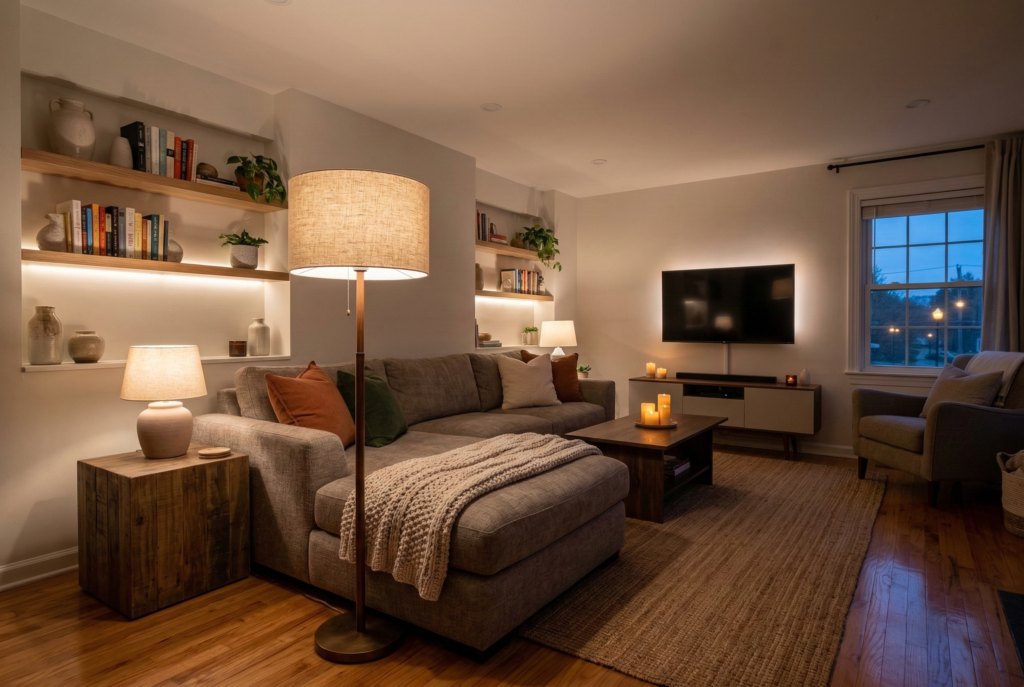
Most rooms aren’t badly decorated. They’re badly lit. One ceiling fixture, installed by a builder in 2009, blasts the whole room from above — and furniture, paint and people all look flatter than they are. This lighting fixtures guide fixes that in the order professionals do: layers first, bulbs second, fixtures last. Because the honest secret is that choosing fixtures is the easy part once you know what each light is FOR.
The 3 Layers Every Room Needs
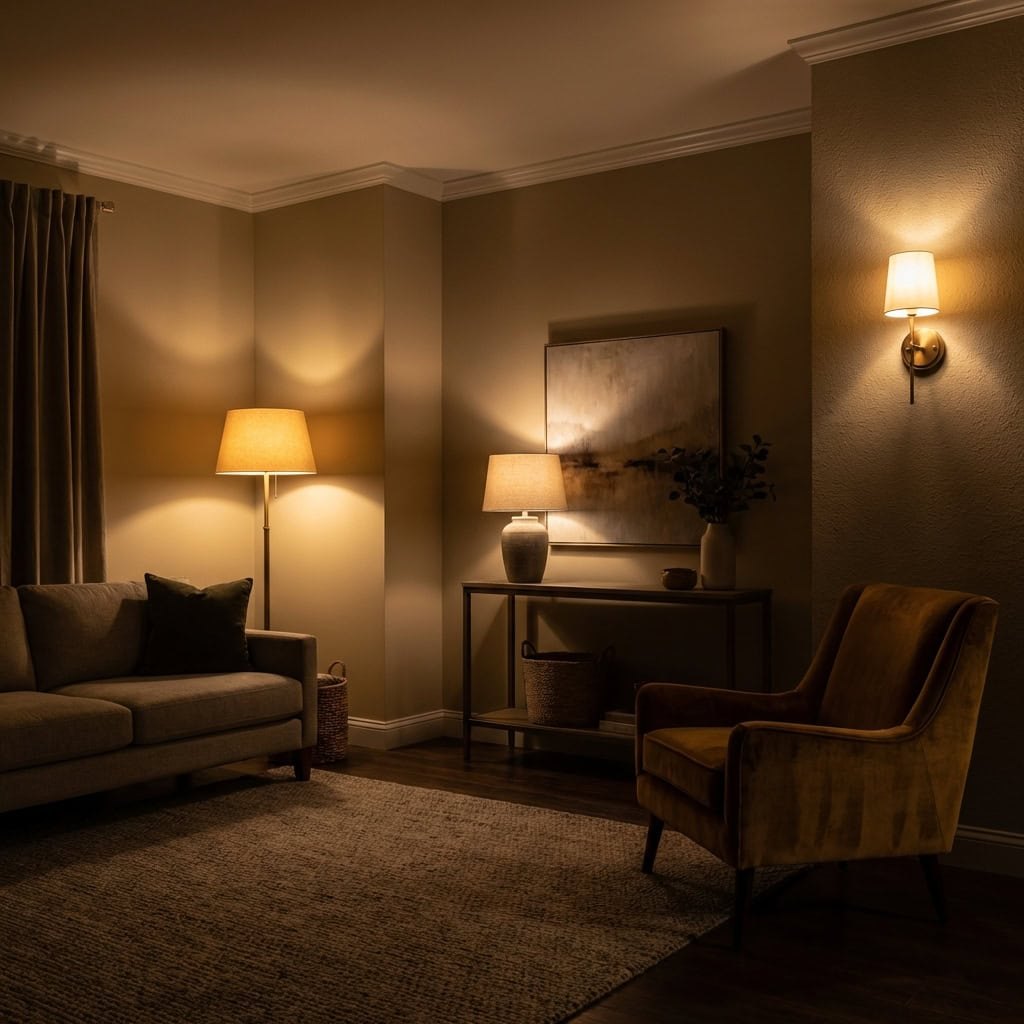
Ambient light is the room’s general glow: ceiling fixtures, recessed lights, anything that lets you cross the room safely. Task light is aimed light for doing things: reading, cooking, makeup, desk work. Accent light is the drama: picture lights, candles, a lamp glowing in a corner, light that exists to make other things look good. A well-lit room has all three, at different heights. A badly lit room has one layer (usually ambient) doing all the work — this single idea is 80% of any lighting fixtures guide worth reading.
Bulbs Before Fixtures: Kelvin and Lumens
The fixture is the outfit; the bulb is the personality. Two numbers matter. Kelvin (color temperature): 2700K is warm candlelight-adjacent coziness (living rooms, bedrooms), 3000K is warm-neutral (kitchens, baths — clean but kind), 4000K+ turns clinical and belongs in garages and hospitals. Mixing Kelvin temperatures in one sightline is the fastest way to make a room feel wrong without knowing why — pick one per room, two adjacent rooms max. Lumens (brightness): forget watts. A living room wants roughly 1,500–3,000 total lumens across its layers; a kitchen 3,000–4,000 including task light; reading spots want 400–800 lumens aimed at the page. Dimmable everything, always — a dimmer converts one fixture into three moods.
The Sizing Rules (So Fixtures Stop Looking Wrong)
Ceiling fixture diameter: add the room’s length + width in feet; that’s roughly the fixture’s diameter in inches (a 12×14 ft room → about a 26-inch fixture). Over a dining table: fixture width = half to two-thirds of the table’s width, hanging 30–36 inches above the tabletop. Pendants over an island: 30–36 inches above the counter, spaced so their light pools meet; odd numbers for long islands. Sconces: about 60–66 inches from the floor beside beds and mirrors — near eye level, not near the ceiling. Every “that light looks off” you’ve ever felt traces back to one of these four numbers.
Room by Room: What to Actually Buy
Living room. Keep the ceiling fixture modest and dimmable, then spend on the layers: a floor lamp by the reading chair (task), two table lamps at different heights (ambient fill), one accent — a picture light or an uplight behind a plant. Total fixtures people actually need here: 4–5 light sources, most of them lamps. Renters, rejoice: this room needs zero wiring.
Kitchen. Ambient from ceiling or recessed, then the workhorse nobody regrets: under-cabinet lighting (LED strips or bars) that puts task light exactly on the counters. Pendants over the island for accent and identity. The kitchen is where 3000K earns its keep.
Dining room. The statement fixture gets its moment here — sized by the rule above, dimmed low for dinner. If the table moves for parties, choose a fixture that still flatters the room empty. Candles on the table are layer three, free of charge.
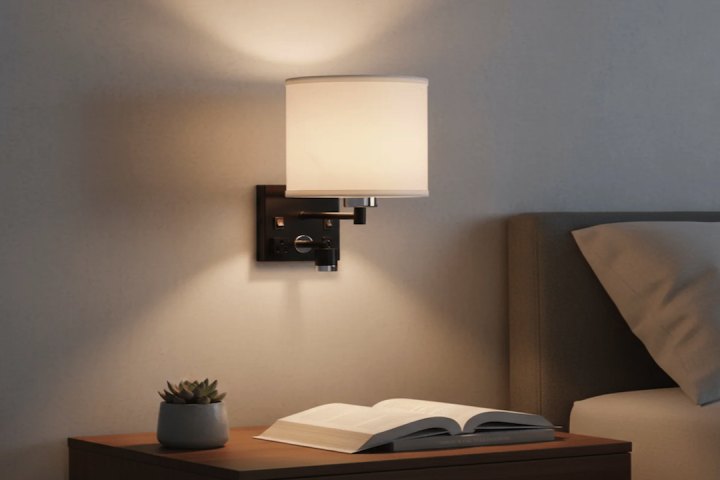
Bedroom. Ambient soft and dimmable, reading light aimed from beside the bed: the plug-in sconces from our master bedroom wall guide or proper table lamps with shades that throw light down onto the page. 2700K, no exceptions — bedrooms lit like offices sleep like offices.
Bathroom. The most-messed-up room in lighting: a single fixture above the mirror lights your forehead and shadows your chin. Correct pattern: light at face level on BOTH sides of the mirror (sconces) or an LED mirror — about 1,600 lumens total at 2700–3000K for true colors. Your makeup and your shaving will file formal thank-you notes.
No-Electrician Upgrades (Renters, This Is Your Section)
Plug-in sconces and pendants (cord + wall hook or swag chain) deliver hardwired looks for the price of the fixture alone. Battery puck lights under cabinets and shelves, motion-sensor versions for halls. Smart bulbs in existing fixtures: dimming, scheduling and Kelvin-tuning from your phone — the cheapest “rewire” in existence. Better shades: swapping a dated shade or a bare-bulb fixture’s glass can modernize a light for $10–20; a lighting fixtures guide that skips shades skips the best value in the whole category. And dimmer plugs for lamps without built-in dimming ($12) complete the kit.
The Budget Order of Operations
With $100: replace every bulb in the main rooms with matched 2700K dimmable LEDs + two dimmer plugs — the biggest single improvement in this entire lighting fixtures guide costs less than one fixture. With $250: add under-cabinet strips and plug-in bedside sconces. With $500: the dining statement fixture and bathroom sconces. Notice the order — bulbs, then task, then statements — because light quality beats fixture beauty every time it’s tested.
4 Lighting Mistakes That Flatten Rooms
The single ceiling light regime. Layers or flatness; there is no third option. Mixed Kelvin chaos. A 2700K lamp beside a 5000K ceiling bulb makes both look broken. Undersized fixtures. When between sizes, go bigger — a too-small chandelier reads as a mistake, a too-big one reads as confidence. Forgetting dimmers. A bright room you can’t soften is a showroom; every layer on a dimmer is hospitality.
Frequently Asked Questions
How many light fixtures does a room need?
Count sources, not fixtures: a living room glows properly with 4–5 light sources across the three layers (for example, one ceiling fixture, one floor lamp, two table lamps, one accent). Bedrooms manage with 3 (ambient + two bedside). Kitchens and bathrooms need their task layers counted separately. Any room lit by a single source — however expensive the fixture — is under-lit by design, which is why this lighting fixtures guide counts layers first.
What color temperature is best for home lighting?
2700K for living rooms and bedrooms (warm, flattering, sleep-friendly), 3000K for kitchens and bathrooms (cleaner, still kind). Keep one temperature per room and never mix 2700K and 4000K+ in the same sightline. If you can only remember one number from this lighting fixtures guide, make it 2700K — it’s almost never wrong indoors.
Can I improve my lighting without an electrician?
Yes — most of the impact lives in plug-in territory: matched LED bulbs, dimmer plugs, plug-in sconces and pendants, battery puck lights, smart bulbs and new shades. Hardwiring only becomes necessary for new ceiling locations or recessed installs. Renters routinely achieve 90% of the layered look with zero wiring, which is why every room plan in this lighting fixtures guide leads with lamps.
How do I choose a chandelier size for my dining room?
Two rules combine: the fixture should be one-half to two-thirds the width of your table, and it should hang 30–36 inches above the tabletop. Cross-check with the room rule (length + width in feet ≈ diameter in inches) and pick the size that satisfies both. When the two rules disagree, favor the table rule — the fixture’s job is to light and crown the table.
The Bottom Line
Fixtures are jewelry; layers are architecture. Audit your rooms for ambient, task and accent, fix the bulbs’ Kelvin before buying a single shade, size by the numbers, and dim everything. Do that, and even builder-grade fixtures start looking deliberate. Your rooms were never badly decorated — they were just waiting for better light.
Lighting is Step 5 in the room sequences across this site — see it inside a full plan in our small apartment living room guide, and browse the budget home decor collection for the rest of the system.