
I once spent $212 on a living room makeover and ended up with a room that looked worse than before.
The rug was too small. The pillows fought the curtains. And the “statement” lamp I loved in the store threw a cold white light that made the whole room feel like a waiting room. I fixed it the next weekend for $47 — and that $47 did more than the $212 ever did.
That’s the whole secret of a living room makeover on a budget. It’s not about how much you spend. It’s about spending in the right order.
Last updated: November 2026
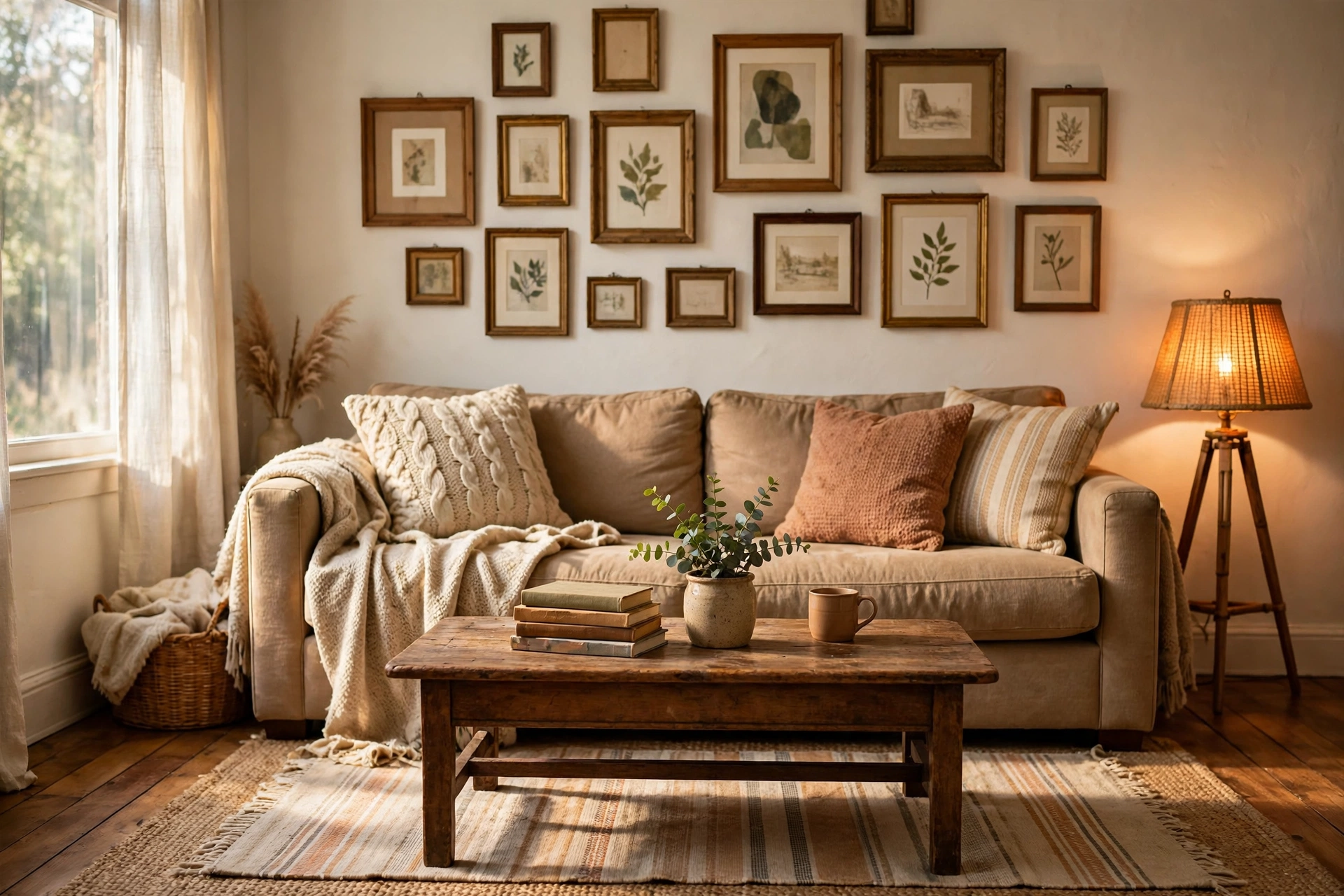
What a Living Room Makeover on a Budget Really Means
A living room makeover on a budget means changing how the room looks and feels for $600 or less, without tearing anything out, by reusing what you own, repainting or rearranging first, and buying only the pieces that fix a specific problem.
That’s the definition. Here’s the part most guides skip.
A makeover isn’t a shopping list. It’s a sequence. Paint before pillows. Layout before lamps. Rug before everything that sits on it. Get the order wrong and you’ll buy twice — once for the idea, once for the fix.
According to Sherwin-Williams, one gallon of interior paint covers about 350 square feet, which means a single $35–$45 gallon is usually enough for one accent wall and the trim touch-ups around it. That’s why paint shows up first in every plan below: it’s the cheapest square footage you’ll ever buy.
Most living rooms need three things, not thirty. A focal point your eye lands on. Enough light at sitting height. And one surface — rug, wall, or sofa — that ties the colors together. Fix those three and guests will swear you renovated. Skip them and no amount of shopping saves the room.
According to IKEA, the LACK coffee table costs $29.99, and I’ve built entire $150 plans around that one fact. A $30 table you style well beats a $200 table you dump clutter on. Every single time. That gap — thirty dollars versus two hundred — is the whole game in a living room makeover on a budget.
Works best for: anyone with a room that feels tired but structurally fine. Won’t help much if the sofa is broken, the carpet smells, or the ceiling leaks — those are repairs, not decor, and no amount of pillows fixes them.
Pick Your Number First: The $150, $300, or $600 Plan
Don’t start with a store. Start with a number.
Pick one of three budgets before you buy a single thing, and treat it like a hard wall. The number decides everything else: whether you paint, whether the rug changes, whether the sofa gets a slipcover or just better pillows. Every living room makeover on a budget lives or dies on that number.
Here’s the honest comparison. The $150 plan is a refresh — free fixes plus one bold move, and it works best when the room is already close. The $300 plan is a real makeover — new rug, real lighting, finished walls. The $600 plan swaps the big pieces: rug, curtains, lighting, and a slipcover or secondhand chair. Same room, three different finish lines.
| Option | Best For | Key Benefit | Limitation |
|---|---|---|---|
| $150 refresh | Rooms that are close already | Biggest visible change per dollar | No new rug or furniture |
| $300 makeover | Most living rooms | Room looks finished, not patched | Sofa stays as-is |
| $600 full swap | Tired rooms needing a reset | Feels like a different room | Still not a renovation |
Quick Comparison: the $150 plan leans on free labor and one gallon of paint, the $300 plan adds the rug and lighting that make a room feel done, and the $600 plan replaces the pieces your eye keeps tripping over. Pick the cheapest plan that fixes your actual complaint — and if you’re not sure what that complaint is, sit in the room for ten minutes tonight and write down the three things that bother you most. That list is your plan.
One warning from my own wallet: the $300 plan is where most people land, and it’s where most people overspend. They buy the rug, then “just one more” cushion, then a throw, then a basket. Cap the extras at $25. Seriously.
The $150 Plan: Free Fixes First, Then One Bold Move
Start free. This plan spends $0 before it spends $150. This is the cheapest honest version of a living room makeover on a budget, and it works because the free work comes first.
First, the free edit: pull everything off every surface, take down anything you don’t love, and put back only a third of it. Then rearrange the furniture — pull the sofa six inches off the wall, angle one chair toward it, and move the lamp to the darkest corner. It costs nothing and it changes the room more than any single purchase.
Then the one bold move: paint one wall. One gallon, one roller, one afternoon. A single accent wall in a warm sage or deep navy gives the room a focal point, and everything else you own suddenly looks intentional next to it. Keep the other walls the warm white they already are.
Here’s the $150 receipt, item by item:
| Item | Cost | Where |
|---|---|---|
| Rearrange + declutter | $0 | Your own two hands |
| One gallon paint + roller kit | $42 | Hardware store |
| Two cushion covers | $24 | Discount store |
| Throw blanket | $19 | Discount store |
| Thrifted frames (4) + paint | $16 | Thrift store |
| Warm-white bulbs (4-pack) | $9 | Dollar store |
| Small potted plant | $12 | Grocery store |
| Total | $122 | $28 left for mistakes |
That $28 buffer matters. It covers the second roller you forgot, the sample pot that was the wrong green, and the frame that cracked when you hung it. Every budget needs a buffer, and this one is built in.
I did this exact plan in my own living room in 2024, and the only thing I would change is buying the paint first. Everything else — the frames, the cushions, the plant — was still on sale the following weekend. The paint was the only thing that set the schedule.
The $300 Plan: The Room Starts Looking Finished
The $150 plan refreshes a room. The $300 plan finishes a living room makeover on a budget. The difference is two purchases: a rug big enough for the room and light at sitting height. Everything else is the same free work, done in the same order.
The difference is the rug. An 8×10 flat-weave rug should reach the front legs of every seat — that’s the test. If it only reaches the coffee table, it’s a bath mat with ambition. Buy the rug before the curtains, because the rug sets the color temperature for everything else.
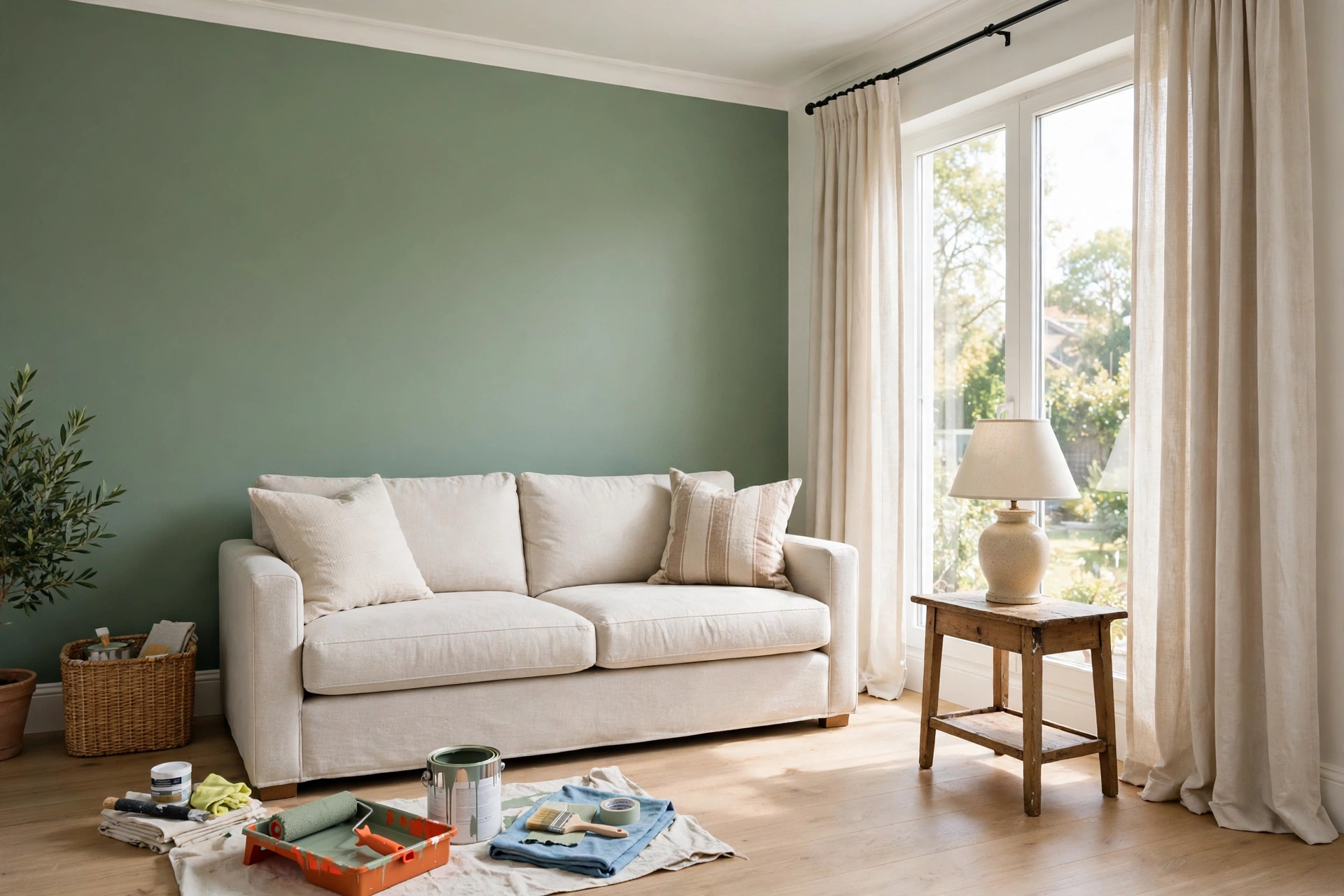
Buy the rug first, then measure for curtains. Hang the rod six inches above the window frame and twice as wide as the window, and the panels should just kiss the floor. Cheap panels hung high look expensive; expensive panels hung low look cheap.
Here’s the $300 receipt:
| Item | Cost | Where |
|---|---|---|
| Everything from the $150 plan | $122 | See above |
| 8×10 flat-weave rug | $89 | Discount retailer |
| Floor lamp (secondhand or sale) | $32 | Thrift / clearance |
| Curtain panels + rod, hung high | $38 | Discount store |
| Two more cushion covers | $19 | Discount store |
| Total | $300 | Right on the number |
Hang those curtains high, put the lamp where you actually sit, and the room will look like the $300 plan was $600. That’s the whole trick: spend where the eye lands, and skip where it doesn’t.
If your living room connects to a small entry, the same rug-and-curtain logic applies there — our small entryway ideas on a budget use the same high-rod trick on a smaller scale, and the same “one big rug” rule.
And if your room is genuinely tiny, start with our small apartment living room decor guide before buying a rug. It covers the layout mistakes that make small rooms feel smaller, and most of them cost nothing to fix.
The $600 Plan: The Full Swap
Six hundred dollars buys a different room, not just a refreshed one. This is the plan for a room that feels tired in every direction: the sofa sags, the chair doesn’t match, and the walls are bare.
This plan keeps the $300 foundation — rug, lighting, curtains — and swaps the two pieces your eye keeps tripping over: the sofa cover and the odd chair. Everything else stays.
Here’s the $600 receipt:
| Item | Cost | Where |
|---|---|---|
| Everything from the $300 plan | $300 | See above |
| Linen-look sofa slipcover | $129 | Online retailer |
| Secondhand armchair | $65 | Resale listing |
| Oversized canvas or textile art | $48 | Discount store |
| Two table lamps (matching) | $38 | Clearance |
| Storage basket + coffee table books | $20 | Thrift store |
| Total | $600 | Right on the number |
The slipcover is the gamble in this plan, and it’s worth it. Measure twice, wash it once before you put it on, and buy the one with the separate cushion covers. A slipcover that fits badly looks worse than the sofa underneath it.
Secondhand chairs are the opposite gamble: the frame is usually fine, the fabric is usually the problem. Sit in it before you buy it, check the legs for wobble, and budget $20 for a cushion insert if the seat sags.
For the wall above the sofa, our console table decor ideas show how one oversized piece beats five small ones — the same rule applies to the art here. One big canvas, hung at eye level, and the wall is done.
And if the room needs curtains to match the new palette, our living room curtain ideas cover the lengths and fabrics that work with a slipcovered sofa. Linen-look panels in a warm neutral are the safest match.
The Weekend Order That Actually Works
Order is everything in a living room makeover on a budget. Paint before pillows, rug before lamps, and styling last. Get the order wrong and you’ll buy the wrong size twice, or hang art on a wall you’re about to paint.
Here’s the sequence, start to finish:
- Friday night: declutter and rearrange the furniture. Nothing new enters the room until the old stuff leaves.
- Saturday morning: paint the accent wall, then leave the house while it dries. Open the windows and don’t touch it.
- Saturday: while the paint dries, shop secondhand — thrift the frames, the table, the lamp. Buy the rug last, once the wall color is dry and you can see it in daylight.
- Sunday morning: hang the curtains high, lay the rug, and place the lamps.
- Sunday afternoon: style the surfaces — cushions, throw, books, plant — and take the “after” photo from the doorway.
Five steps. Two days. One room.
Styling goes last for a reason. If you style first, you’ll decorate around clutter you were going to throw out. The room tells you what it needs once it’s empty, not before.
7 Mistakes That Eat a Budget Makeover Alive
I’ve made most of these myself in a living room makeover on a budget, and each one cost me a return trip or a wasted purchase. Learn from the receipts, not the mistakes.
- The too-small rug. A rug that only reaches the coffee table makes the room look like a waiting room. It should reach the front legs of every seat, or don’t buy it.
- Painting the wrong wall. The accent wall is the one you see when you walk in, not the one behind the sofa. Paint the wrong one and the room feels lopsided.
- Buying the cushions before the rug. The rug sets the colors; the cushions echo them. Reverse the order and the cushions fight everything else in the room.
- Cold white bulbs. A 5000K bulb turns a cozy room into an office. Buy 2700K warm white, and the paint color you chose will actually look like the sample.
- Matching furniture sets. A matching sofa, chair, and loveseat set looks like a showroom, not a home. Mix one thrifted piece in and the room relaxes.
- Hanging art too high. Art hung at standing eye level floats above a sitting room. Hang it so the center sits at sitting eye level — about 57 inches from the floor.
- Skipping the measuring tape. Every “I’ll just eyeball it” purchase in this guide’s history ended in a return. Measure the wall, the window, and the rug space before you spend a dollar.
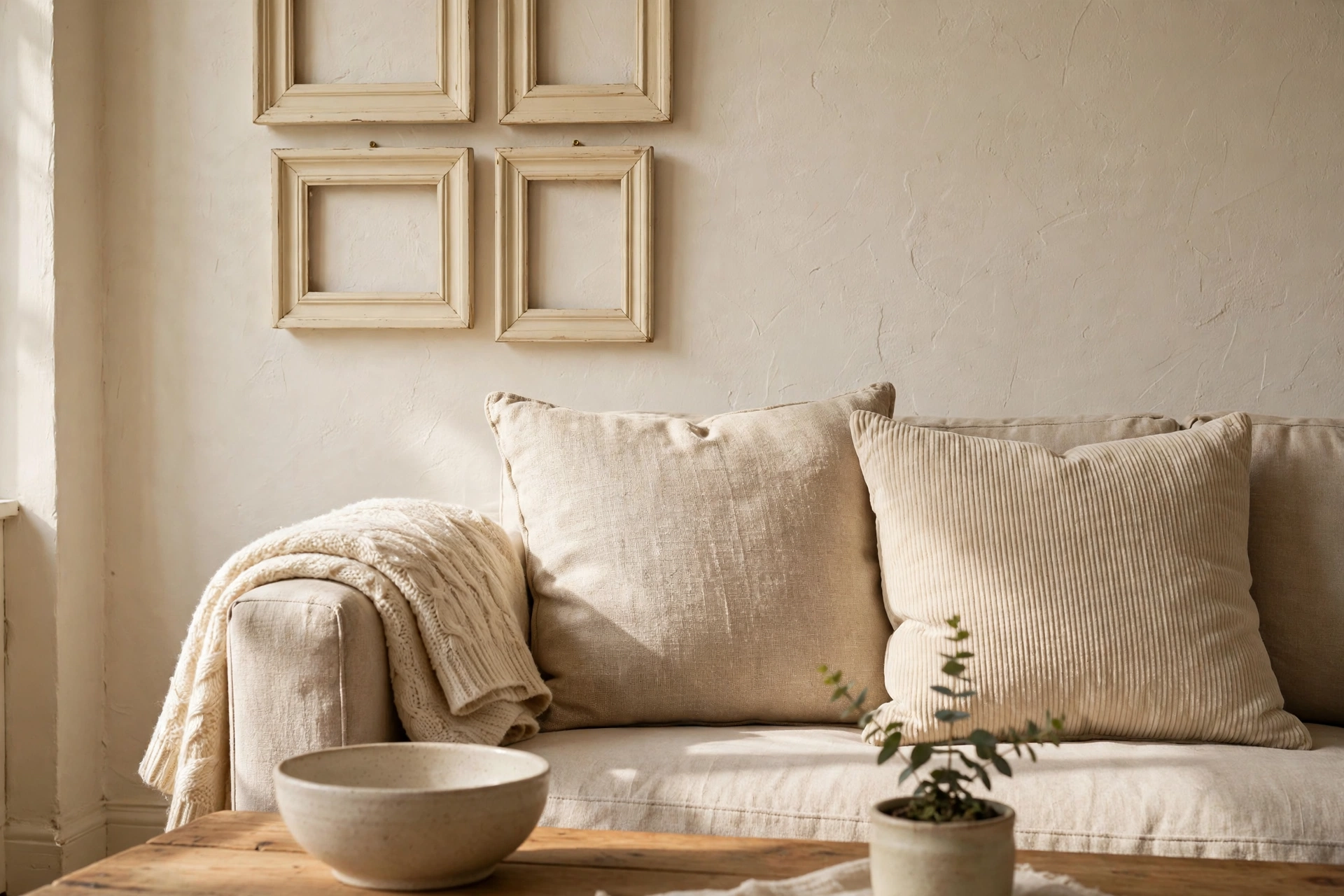
What to Skip (and What to Splurge On)
Here’s my pushback opinion: skip the accent wall if your room is already dark.
Everyone online tells you to paint one wall a bold color. In a dark room with one small window, that wall swallows the light and makes the room feel smaller, not bolder. Paint the room the same warm white instead, and put the color in the rug and the art. You’ll get the contrast without losing the light.
Skip: matching throw pillow sets, trendy “live laugh love” signs, tiny decor under $10 that you buy five of, and any furniture you haven’t sat in. A living room makeover on a budget rewards patience more than spending, so the money goes where it shows. Splurge: the rug, the lighting, and one piece of art big enough to anchor a wall. That’s where the money shows.
And skip the new sofa in a living room makeover on a budget if the old one is structurally fine. A slipcover and new legs cost a tenth of a replacement, and the room won’t know the difference.
One more thing worth saying plainly: most of the “budget” makeovers you see online quietly cost $2,000. They just don’t show the receipts. Ours are above. If a plan can’t show its math, it’s not a budget plan — it’s a shopping haul with better lighting. For the same honest-math approach applied to the whole house, our 30 ways to make your house look expensive on a budget runs the same trick room by room.
5 Questions Everyone Asks Before Starting
How much does a living room makeover on a budget actually cost?
A refresh starts around $150, a real makeover lands near $300, and a full swap runs about $600. Those are the real numbers from this guide, receipts included above. Anything under $150 is mostly rearranging and paint; anything over $600 is a different project.
Can I makeover my living room in one weekend?
Yes, if you follow the order in this guide. Declutter and rearrange Friday night, paint and hang Saturday, style Sunday. The one thing you can’t rush is paint drying — give the accent wall a full night before you hang anything on it.
What should I buy first for a living room makeover on a budget?
Paint, then the rug, then lighting. Paint is the cheapest square footage, the rug sets the scale, and lighting changes how both of them look. Buy in that order and you won’t buy twice.
How do I make a small living room look bigger on a budget?
Pull the sofa off the wall, hang the curtains high and wide, and use one large rug instead of two small ones. The rug should reach the front legs of every seat. Small rugs chop a room into pieces; one big rug pulls it together.
Is it cheaper to paint or replace furniture?
Paint, by a lot. A $35 gallon covers an accent wall and the trim touch-ups. A replacement sofa starts at ten times that, and a slipcover costs about $129. Paint first, slipcover second, replace last — and only if the frame is broken.
Start With the Free Stuff Tonight
You don’t need a shopping trip to start a living room makeover on a budget. You need an evening, a trash bag, and the willingness to pull the sofa six inches off the wall.
Do the free edit tonight. Take everything off every surface, put back a third of it, rearrange the furniture, and live with it for a day. If it still feels flat tomorrow, buy the paint.
Take the “after” photo from the doorway, at sitting height, in daylight. That’s the photo you’ll compare everything to — and the one that proves a $150 plan was enough.